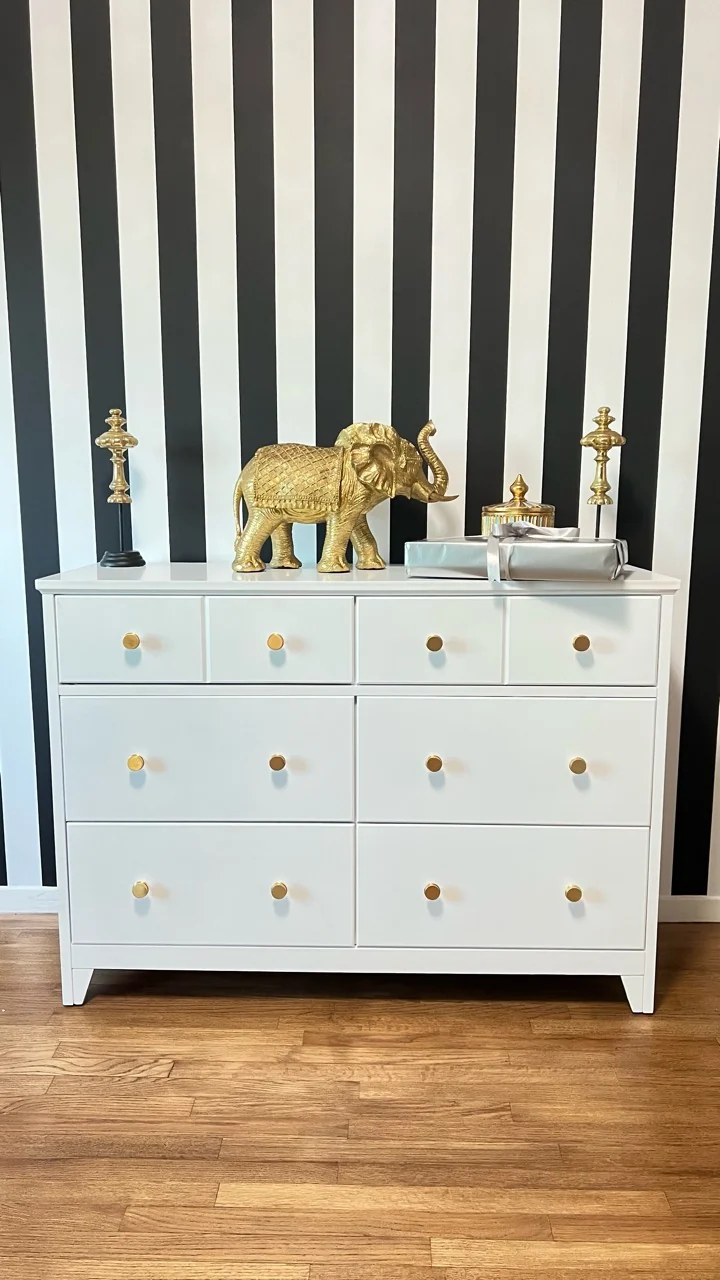
Paint and decorative trim can change the character of a room in very different ways. This collection brings together ten distinct accent wall treatments, from crisp vertical stripes to classic picture-frame molding and angular batten patterns. Each image is described separately so you can compare the color family, panel layout and relationship to the furniture.
1. Black-and-White Vertical Striped Accent Wall
Alternating dark and light vertical stripes give this wall a strong, graphic identity. Behind the white dresser, the pattern adds contrast without competing with the furniture’s simple outline. The gold-toned accessories introduce warmth against the monochrome backdrop. For a painted striped accent wall, the visual balance comes from the stripe width, spacing and how the pattern meets the room’s edges. This look works especially well when the surrounding furniture and accessories stay relatively restrained.
2. Charcoal Picture-Frame Molding Behind a Statement Sofa
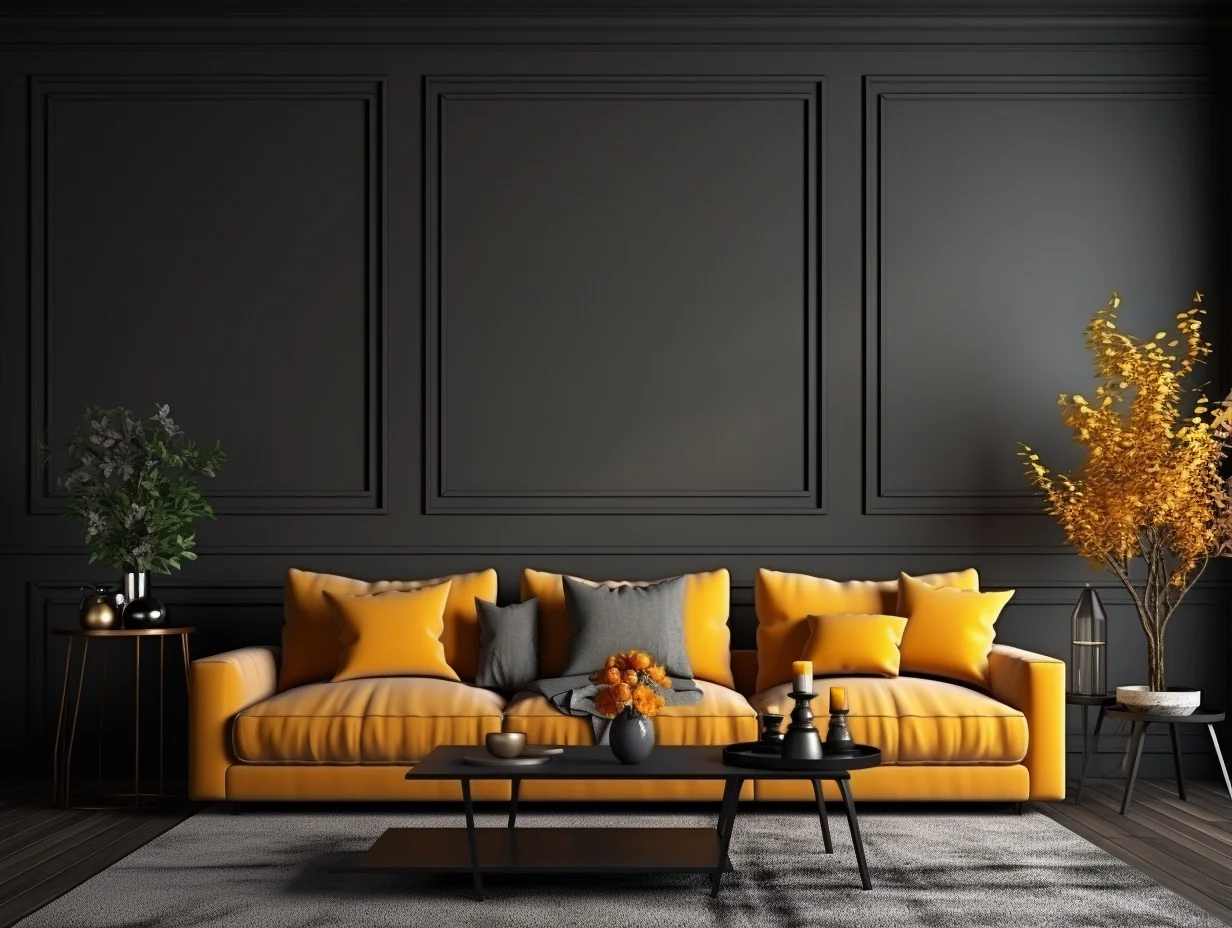
Large rectangular frames turn a dark wall into an architectural feature. Painting the trim and wall in the same charcoal tone lets the raised profiles create definition through light and shadow. The mustard-colored sofa provides the strongest contrast in the room, while the lower molding band ties the composition together. This accent wall treatment combines classic picture-frame molding with a dramatic palette; the proportions of the frames are as important as the color.
3. Deep Blue Wall with Lower Panel Molding
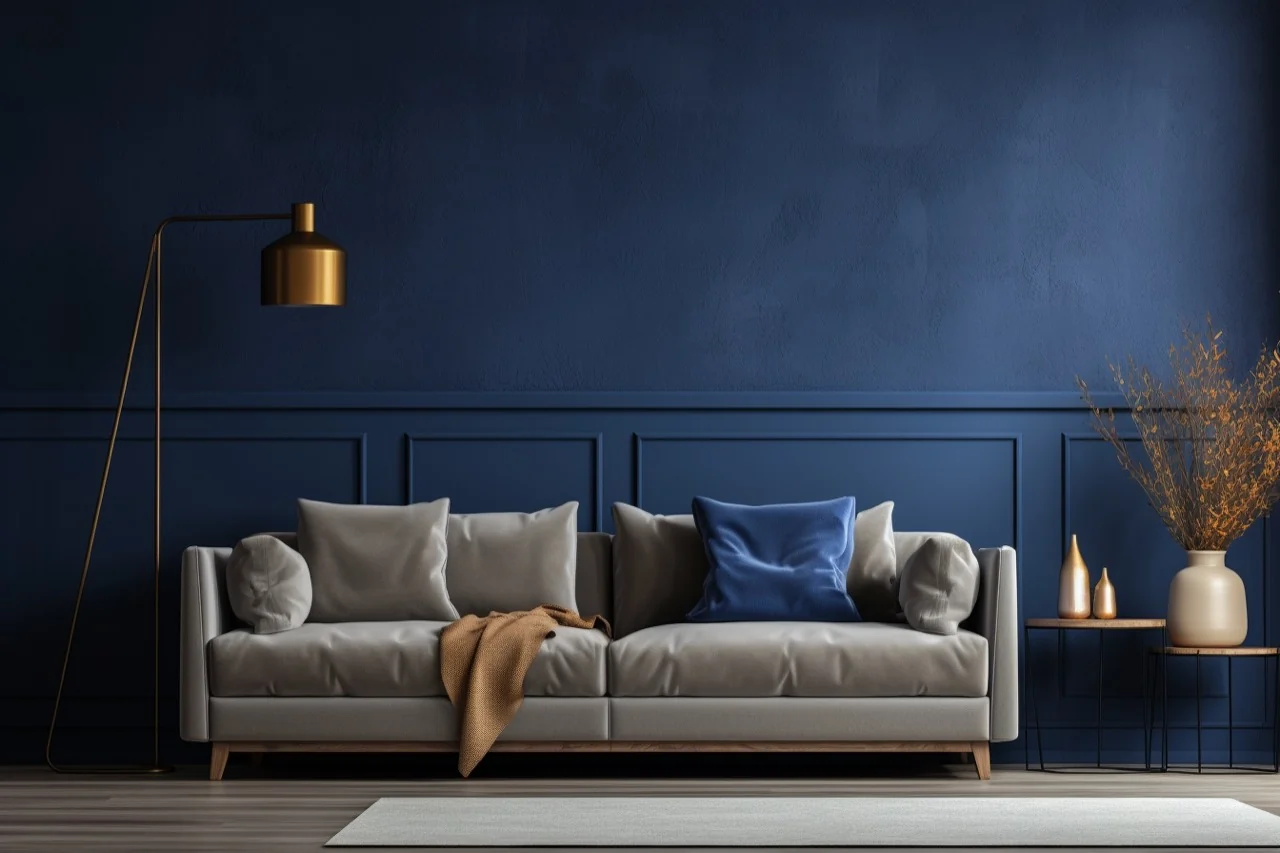
This deep blue wall places the decorative molding below a continuous horizontal rail, leaving a broad area of painted wall above. The result is more restrained than a full-height grid, with the lower frames adding structure around the seating area. A gray sofa and warm metallic lamp soften the dark backdrop. For a similar painted wall and molding design, the rail height should be considered alongside the furniture so that the horizontal line feels connected to the room.
4. Light Gray Full-Height Molding with a Contrasting Ceiling
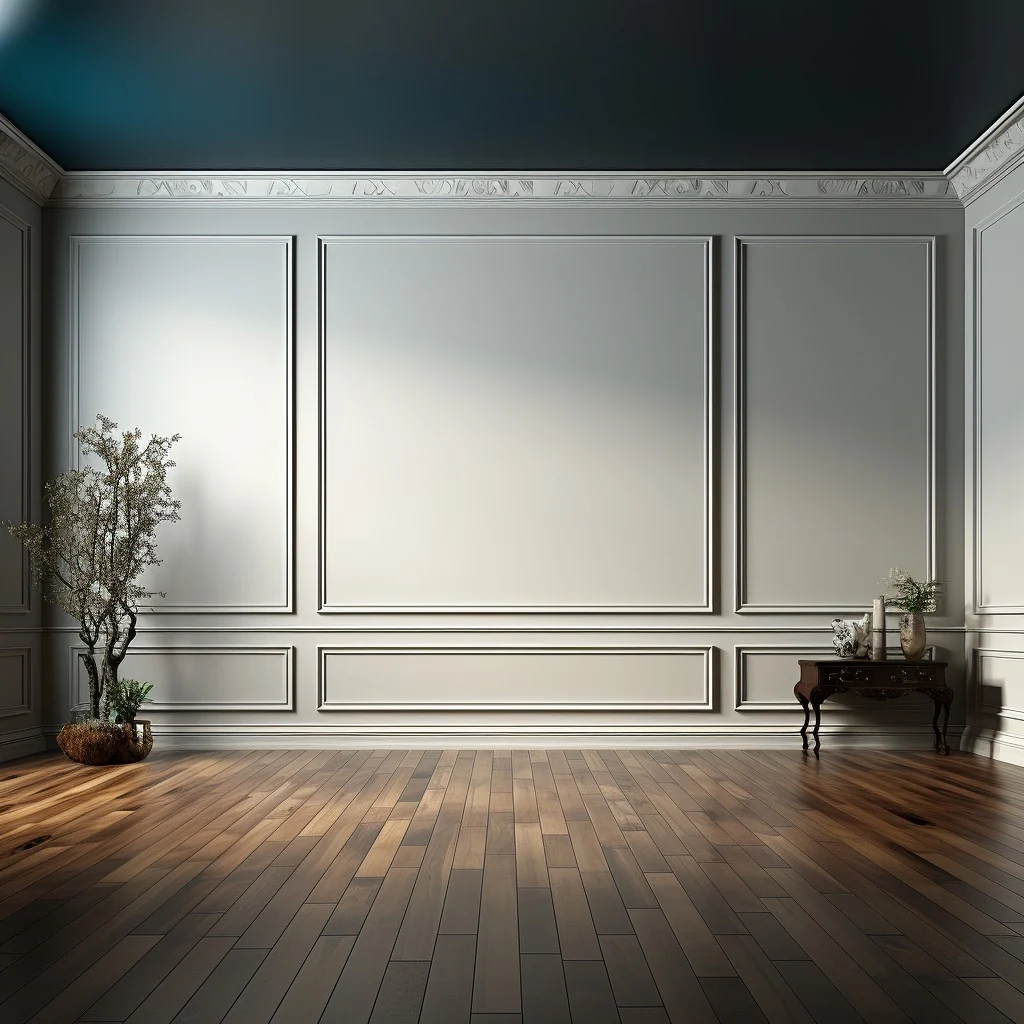
Tall upper frames and smaller lower panels create a layered wall treatment with a traditional character. The light gray finish keeps the molding readable without relying on a sharp trim-to-wall color contrast. Above it, the darker ceiling creates a distinct boundary and draws attention to the crown detail. The design shows how a neutral painted wall can still become the room’s focal point through panel proportions, repeated spacing and the relationship between wall and ceiling.
5. Geometric Charcoal Accent Wall with Diagonal Battens
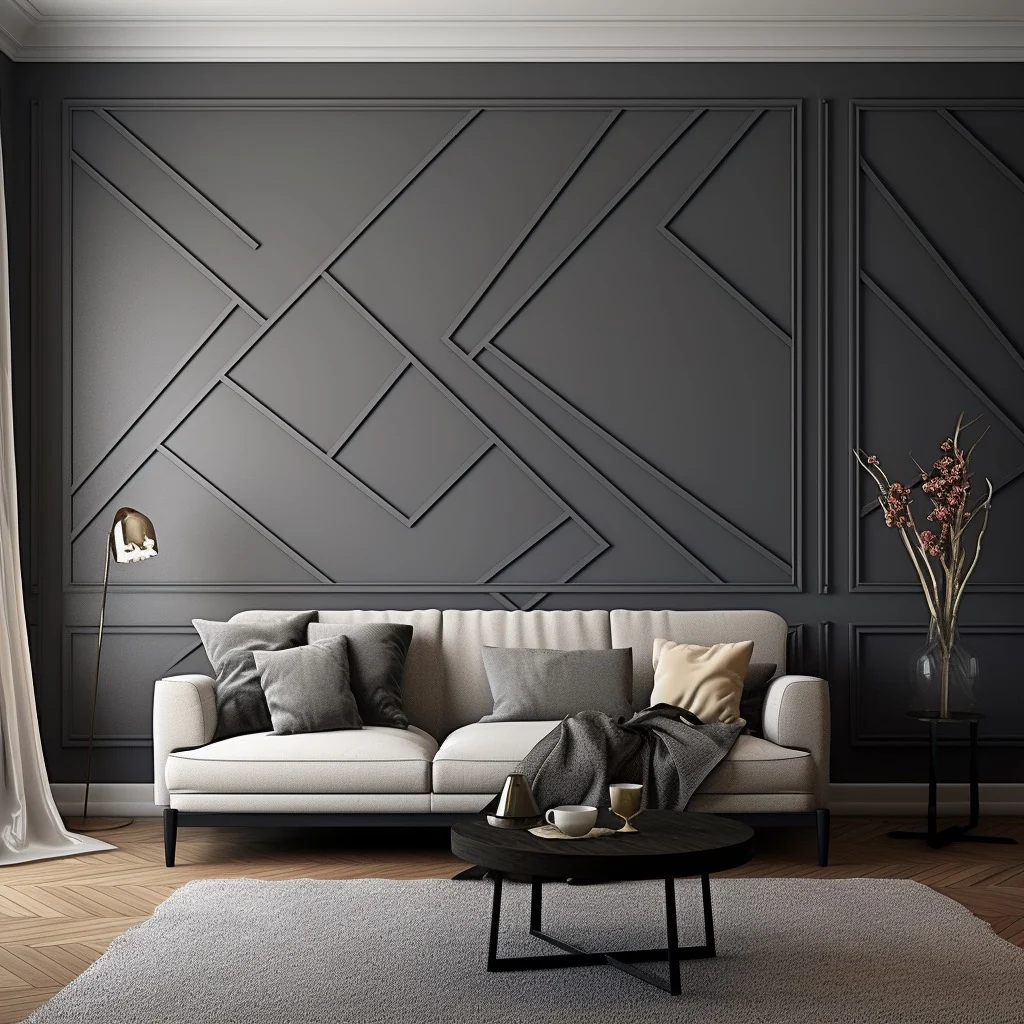
Diagonal battens add movement to this charcoal feature wall. The intersecting lines sit inside a large rectangular border, combining a contemporary geometric pattern with more familiar panel molding around it. Painting the battens and background together keeps the effect dimensional rather than multicolored. The light sofa makes the pattern easier to read. A geometric accent wall like this depends on a clear overall composition, with the diagonal directions and outer frame considered as one design.
6. Deep Green Office Feature Wall with Geometric Trim
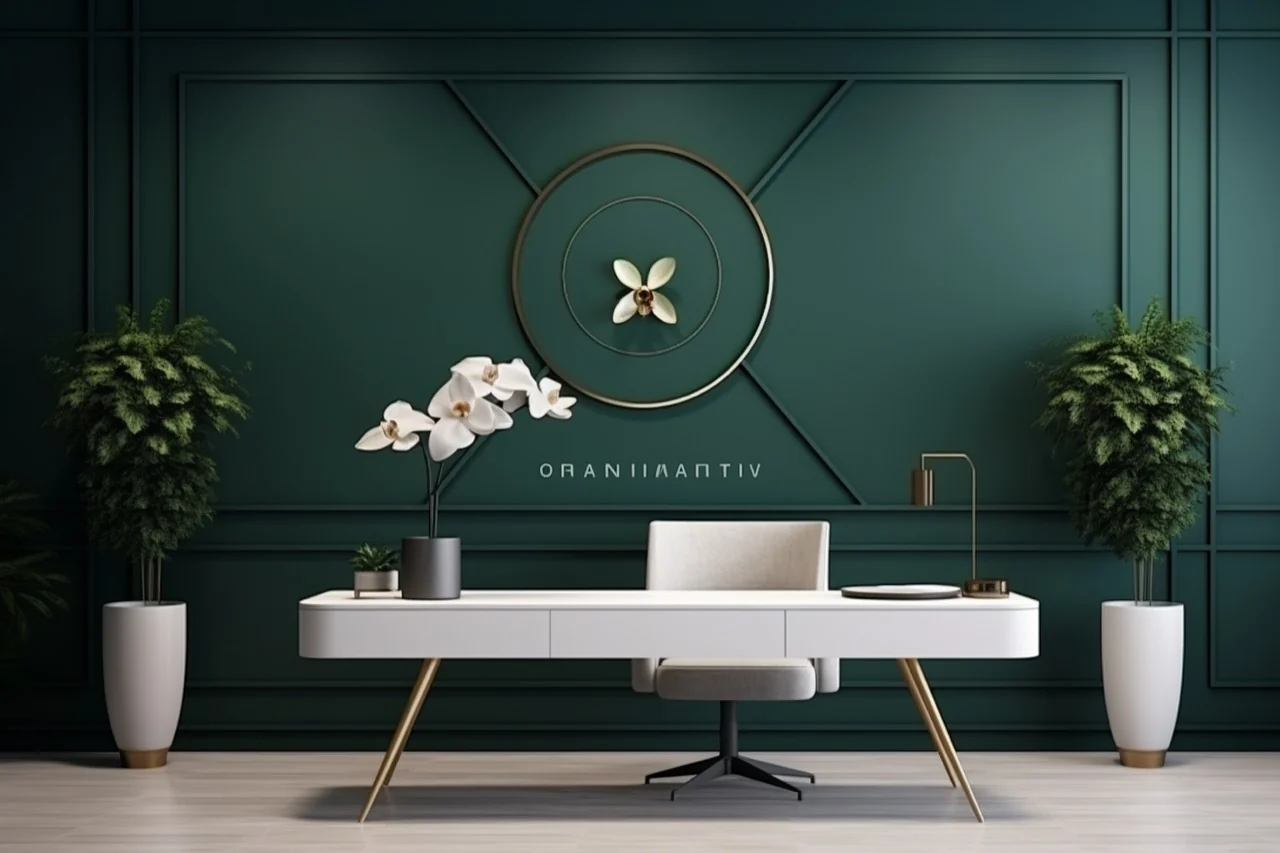
A deep green wall gives this workspace a defined background. The rectangular border and diagonal trim direct attention toward the circular decoration above the desk, while the pale desk contrasts with the darker wall. This is a different use of accent wall molding: the design is organized around the workspace rather than a sofa or bed. For an office backdrop, symmetry, desk position and the height of any central decoration help determine the arrangement of the wall frames.
7. Muted Lavender Panel Molding with Compact Wall Lights
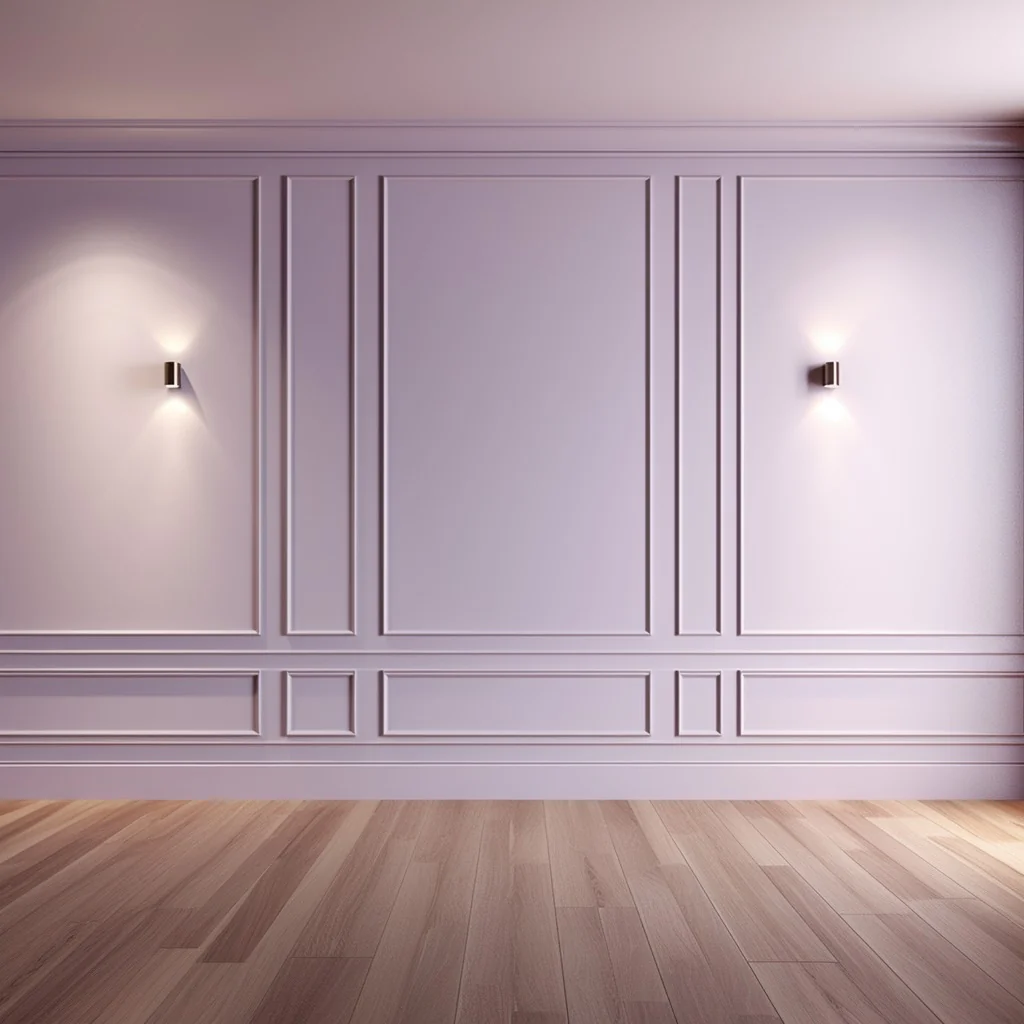
This wall combines a muted lavender tone with a repeated pattern of wide panels and narrow vertical frames. A smaller band of rectangular molding runs below, giving the composition a consistent base. Two compact wall lights add another layer of definition across the painted surface. The soft color keeps the architectural detail from feeling severe. It is a useful example of how decorative molding can give a pale accent wall character without relying on a dark or highly saturated finish.
8. Blue-Green Living Room Wall with Tall Framed Panels
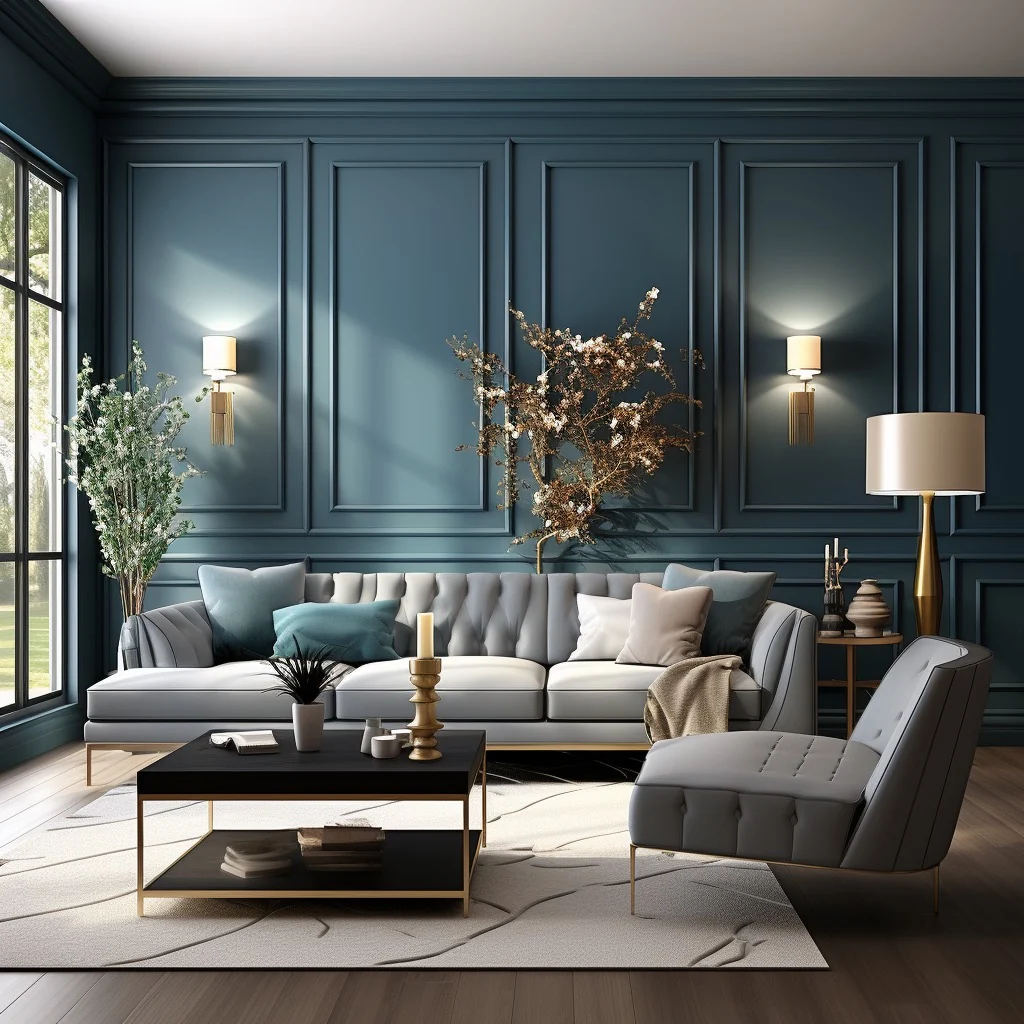
Repeated tall frames give this blue-green living room wall an even architectural rhythm. Daylight from the side window and the wall sconces bring out the molding profiles, while the light upholstery creates contrast with the painted background. The consistent panel spacing holds the composition together behind several pieces of furniture. This treatment shows how full-height picture-frame molding can define a living room wall while leaving room for lighting and a flexible seating arrangement.
9. Charcoal Lower-Wall Molding for a Quiet Corner
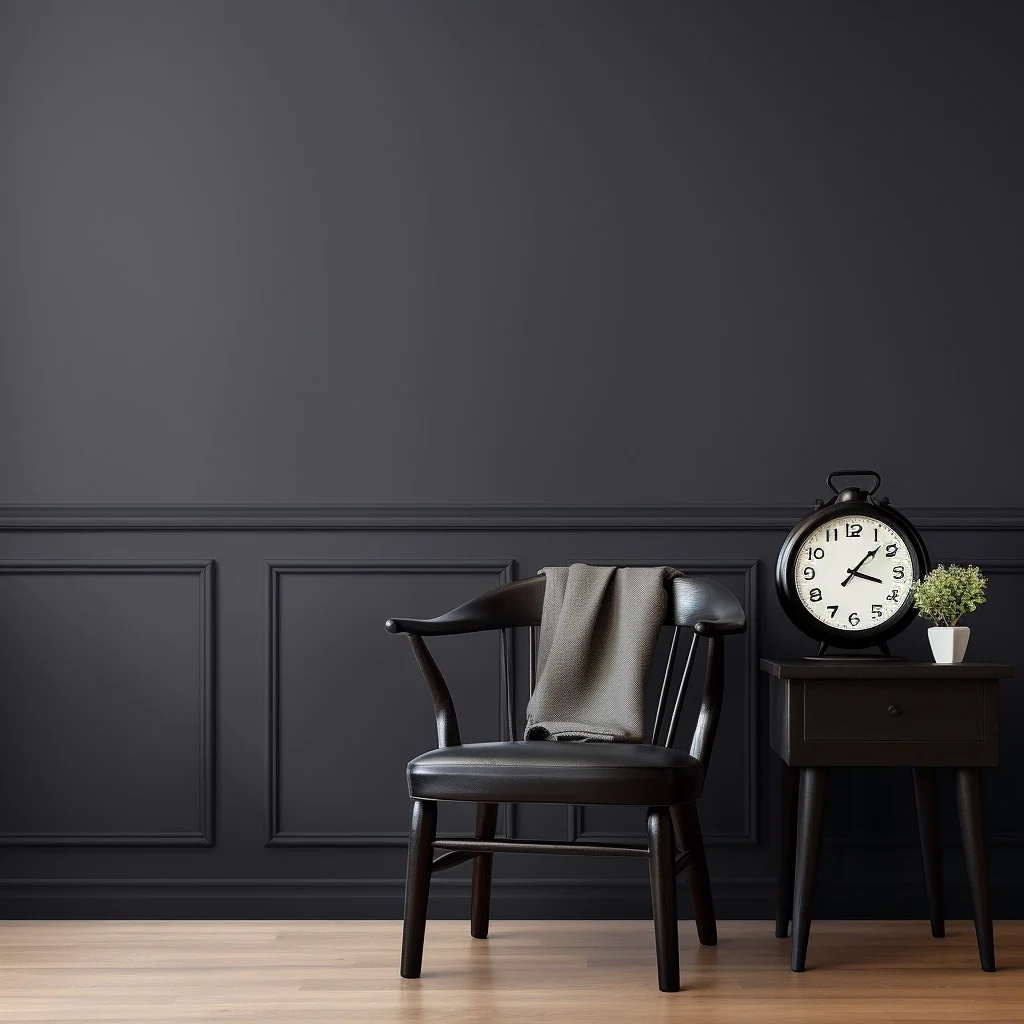
A horizontal rail and lower rectangular frames give this charcoal wall a measured amount of detail. The plain upper wall leaves generous visual space above the chair and side table, making the treatment suited to a smaller seating or reading corner. Because the trim and wall share a similar dark tone, the profiles are expressed mainly through shadow. This example offers a quieter alternative to a full-wall pattern while retaining the character of decorative wall molding.
10. Soft Lilac Picture-Frame Wall with Slim Sconces
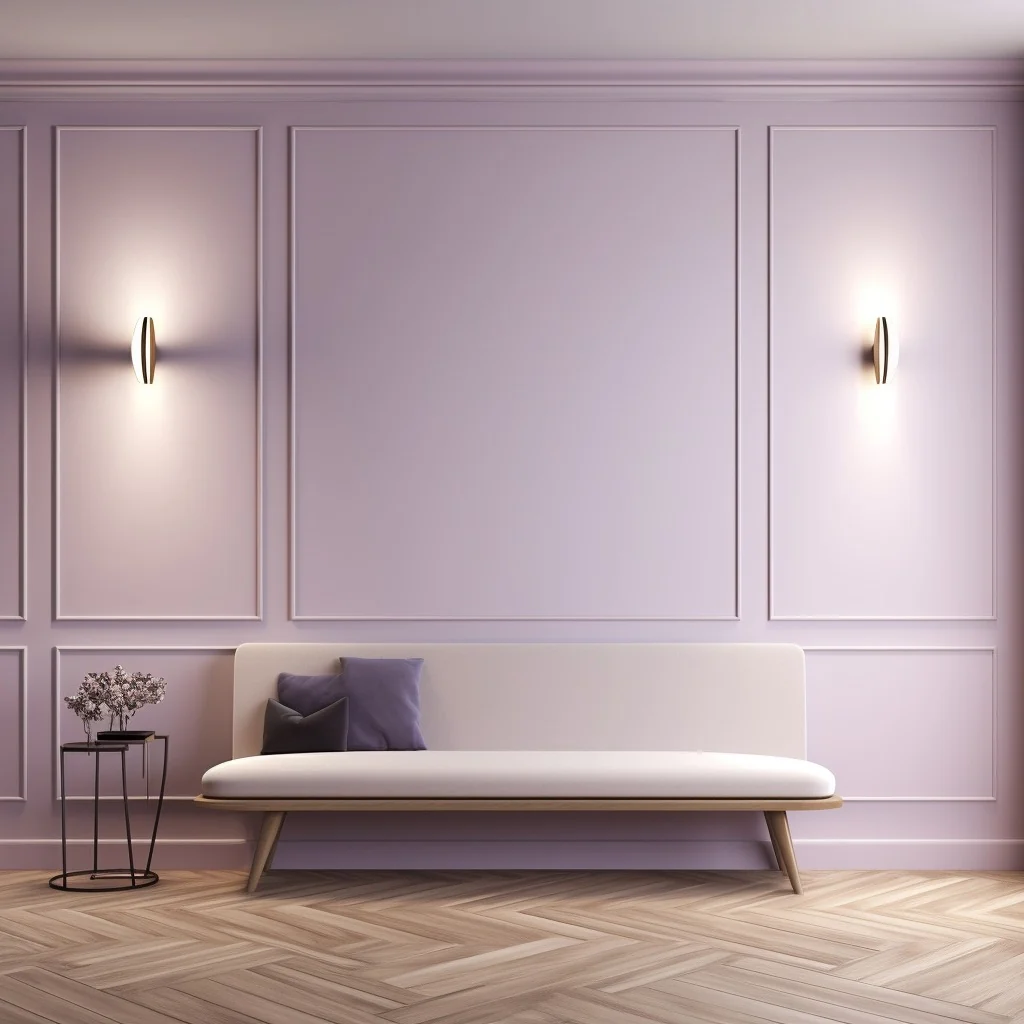
A wide central molding panel anchors this soft lilac wall, with narrower framed sections and slim sconces on either side. The pale upholstered bench keeps the focus on the wall’s proportions and gentle color contrast. Compared with the more intricate lavender panel layout in this collection, this composition uses fewer, larger shapes. It shows how the same family of soft colors can support a cleaner, more open accent wall arrangement.
Plan an accent wall around your room
Bring a wide photo of the wall, approximate dimensions and a few details about the furniture you want to keep. For molding or batten work, include doors, outlets, existing trim and any planned wall lights in the brief. These details help define a pattern that belongs in the room.
For accent wall painting and decorative trim inquiries in Westwood, Bel Air, Pacific Palisades, Malibu and Hollywood, share your room photos with Chain Construction. Tell us which wall treatment you like, and we can discuss the scope and next steps for your space.