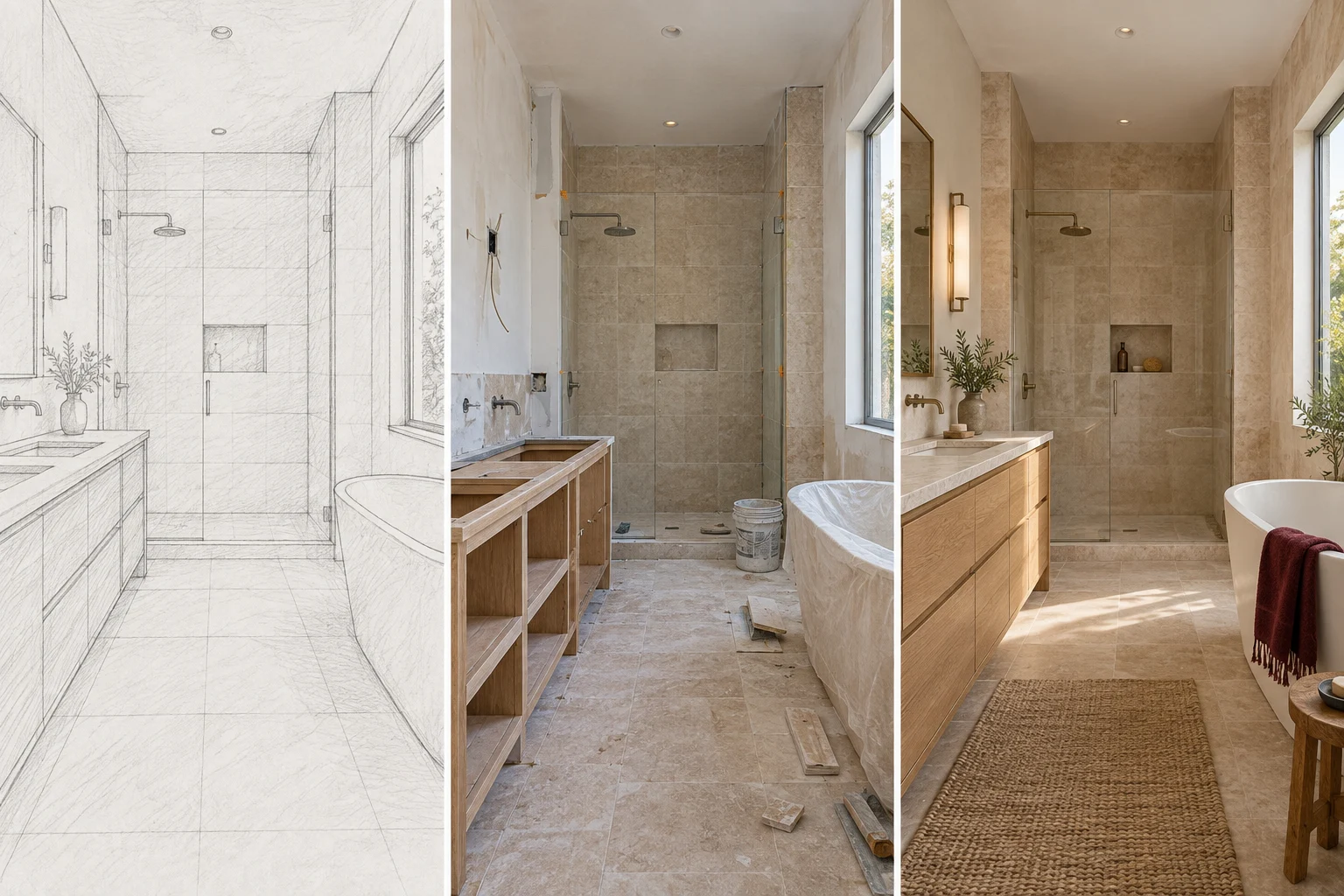
Living through a bathroom remodel is manageable when you plan for it before demolition day. The room will be out of use for a stretch, there will be noise and some dust, and people will be coming and going. Thinking through where everyone will shower, how kids and pets will stay safe, and what needs protecting makes the project much easier on your household.
If it's your only bathroom
Remodeling the only bathroom in the home is common in Los Angeles, especially in older houses, condos and smaller apartments. Talk with your contractor early about the sequence. In some projects the toilet can be reinstalled temporarily at the end of each day, or kept working until a later stage. Showering is harder to keep available once the shower is torn out.
- Ask which days the toilet and shower will be completely unavailable
- Arrange access to a gym, family member or neighbor for showers
- Consider renting a portable toilet for longer stretches if space allows
- For longer projects, look at a short stay elsewhere during the most disruptive phase
- Keep a basin, towels and toiletries in another room for quick washing
Setting up the schedule around your routine
Ask for a general sequence of work: demolition, rough plumbing and electrical, inspections, waterproofing, tile, fixtures, glass and final details. Each stage has different impacts. Demolition is the loudest and dustiest. Inspections may leave the room idle for a day or two. Custom glass is usually measured after tile, so there can be a short gap before the shower is fully usable.
Agree on working hours, how the crew will get in, where they can park, whether someone needs to be home, and how you will be told about changes. Local noise rules often limit construction hours, and condo buildings may have their own rules for elevators, deliveries and quiet hours. Share those with your contractor before work begins.
Dust protection and keeping the house clean
Bathroom demolition creates dust from tile, mortar, drywall and plaster. Good containment keeps most of it in the work area. Ask what protection is included in the proposal, and prepare the house before day one.
- Plastic sheeting or zip-door barrier at the bathroom door
- Floor protection along the path from the entrance to the bathroom
- HVAC return vents near the work area covered or sealed
- Furniture, art and electronics along the route moved or covered
- A designated staging area for tools and materials
- Daily cleanup of the work area and path
- Closets and cabinets near the bathroom emptied or sealed
If your home was built before 1978, painted surfaces may contain lead. Federal EPA rules require contractors to follow lead-safe work practices when disturbing paint in pre-1978 homes, including containment and cleanup. Ask your contractor how they handle this.
Kids, pets and safety on site
A work zone has tools, sharp debris, open wall cavities and sometimes shut-off water or power. Keep children and pets out of the area entirely. Close the door, use a baby gate where helpful, and tell the crew about pets so doors and gates are not left open. Some pets are stressed by noise and strangers; a quiet room, daycare or time with friends can help during demolition.
Walk the children through what is happening and which areas are off limits. Remind everyone that water or power may be off for short periods, and keep a flashlight handy in case the bathroom circuit is disconnected.
Deliveries, storage and neighbors
A remodel brings deliveries of tile, fixtures, vanities and glass, plus debris going out. Decide where materials can be stored safely: a garage bay, a covered corner of the driveway or a spare room. Boxes of tile are heavy and fixtures are fragile, so they should be kept dry and out of the way of foot traffic. Check each delivery against the selection list when it arrives so missing or damaged items can be reordered early.
A short note to neighbors before demolition goes a long way, especially in townhomes, condos and houses with shared driveways. Let them know roughly when the loud days are and how to reach you. In buildings with a homeowners association, confirm whether approval, insurance certificates or elevator reservations are required before work starts.
Staying informed during the project
Agree on how updates will be shared, whether that is a quick daily text, photos at key stages or a weekly call. Ask to see the plumbing and electrical rough-in and the waterproofing before they are covered, since those are the parts you will never see again. Keep a running list of questions so you can raise them at one time rather than interrupting work throughout the day.
Before demolition day: a household checklist
- Empty the bathroom completely, including cabinets, shelves and the medicine cabinet
- Remove items from walls on both sides of shared walls, as vibration can knock them down
- Clear a path from the entry to the bathroom
- Set up a temporary grooming station in another room
- Plan shower and toilet alternatives for the down days
- Confirm parking, access and building rules
- Share contact details and your preferred way to receive updates
- Make sure all selections are ordered and delivery dates are confirmed
Next step: plan the project with us
Tell us how many bathrooms the home has, who lives there, including pets, and any constraints such as building rules or work-from-home schedules. Send photos of the bathroom and the path from the entrance. We will outline the work sequence, the protection we plan to use and which stages will affect daily routines most. Call Chain Construction at (213) 519-8066.