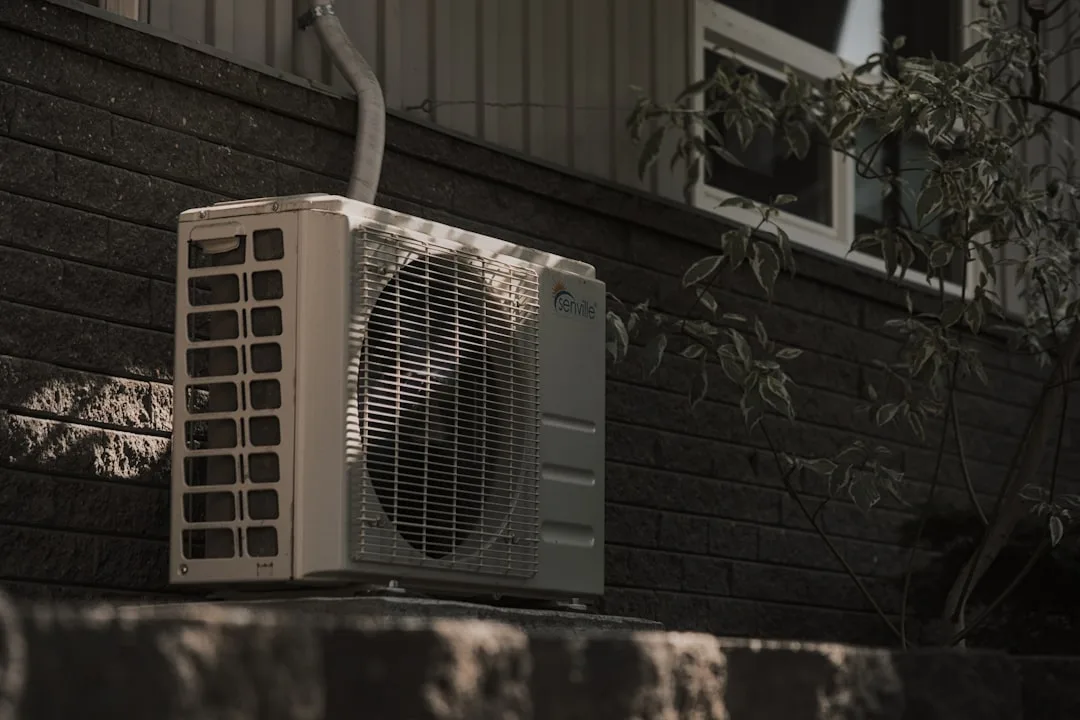
Choosing a new AC system is easier when you start with the rooms instead of the equipment catalog. Where do you spend your time, which rooms run hot, and where do you need quiet? Those answers point you toward a central split system, a heat pump, a ductless mini-split or a mix. This guide explains how each option fits real room-by-room needs in Los Angeles homes.
Start choosing a new AC system with a room map
Walk through the house and note how each room is used and how it feels on a hot afternoon. A bedroom over the garage, a west-facing living room and a converted garage office often have very different needs. Write down:
- Rooms that are too hot, too cold or uneven compared with the rest of the house
- Rooms used at unusual hours, such as a home office, nursery or media room
- Bedrooms where noise matters most
- Additions, converted garages or ADUs that the current ducts do not reach
- Where the current equipment and ducts are located, and their condition
- Plans for remodeling, solar or an electric panel upgrade
Share this map with the installer. It helps with the load calculation and makes proposals easier to compare.
Central split air conditioner
A central split system pairs an outdoor condenser with an indoor coil on a furnace or air handler, and it cools the whole house through ducts. If your home already has ducts in reasonable condition, replacing like for like is often the simplest path. It keeps equipment out of the rooms and uses one thermostat, or several with zoning.
The limitation is that every room depends on the ducts. If one room has always run hot because of a long or leaky duct run, a new condenser will not fix that on its own. Ask the installer to evaluate the ducts as part of the proposal.
Heat pump
A heat pump looks and works like a central air conditioner in summer, but it can reverse to provide heat in winter. In the mild Los Angeles climate, a heat pump can often replace both a central AC and a gas furnace. It can use your existing ducts if they are suitable.
Before deciding, ask about the electrical capacity of your panel and whether the change affects your gas furnace or other appliances. Incentive programs for heat pumps change frequently, so check current offerings from your utility, such as LADWP or SCE, rather than relying on older information.
Ductless mini-split
A ductless mini-split connects an outdoor unit to one or more indoor heads mounted on walls or ceilings. Each head serves its own room or zone with its own control. Mini-splits are a common choice for homes without ducts, additions, converted garages, ADUs and single rooms the central system never cools well.
The trade-offs are visible indoor units, refrigerant lines and drain lines that need a route through walls, and a separate filter to clean for each head. A mini-split can also be combined with an existing central system to fix one problem room without replacing everything.
Zoning and controls
If some parts of the house are used more than others, zoning lets you cool them separately. With central systems, zoning uses motorized dampers in the ducts and a control panel connected to several thermostats. With mini-splits, each indoor head is already its own zone.
Zoning works best when it is designed with the equipment, not added later. Variable-speed or multi-stage equipment usually handles zoning better than a single-stage unit. Ask how the proposed controls work and whether the thermostat is compatible with the equipment.
Comparing the options side by side
- Central split AC: best when ducts are in good shape and the goal is whole-house cooling with a furnace for heat
- Heat pump: similar to central AC in summer, also heats in winter, and can replace a gas furnace in a mild climate
- Ductless mini-split: room-by-room control, no ducts needed, visible indoor heads
- Hybrid approach: a central system or heat pump for most of the house, plus a mini-split for one problem room or addition
- Zoned central system: one set of equipment with dampers and several thermostats for areas used at different times
Operating cost depends on efficiency, how well the system is sized, and the condition of the ducts. Compare efficiency ratings on the same basis, which for new equipment is SEER2 for cooling and HSPF2 for heat pump heating. Keep in mind that leaky ducts in a hot attic can cancel out much of the benefit of a high-efficiency unit, which is one reason ductless systems and duct sealing both come up in Los Angeles homes.
Noise: placement matters as much as the equipment
Noise is often overlooked until it is too late. Outdoor units are usually rated in decibels, and variable-speed equipment tends to run more quietly at low speed for most of the day. Placement matters as much as the rating. In Los Angeles side yards, a condenser a few feet from a bedroom window, or from a neighbor's, can be disruptive. Discuss placement, vibration pads and clearances with the installer, and check any local noise rules that may apply.
Indoor noise comes mostly from airflow. Undersized return ducts and restrictive registers can make a quiet system sound loud. A good proposal considers the air path as well as the equipment.
Next step
Send us your room map, the location and age of your current equipment, photos of the equipment labels and a note about which rooms matter most. Call Chain Construction at (213) 519-8066. Our licensed HVAC partner can prepare options, including combinations such as a central system with a mini-split for one room.