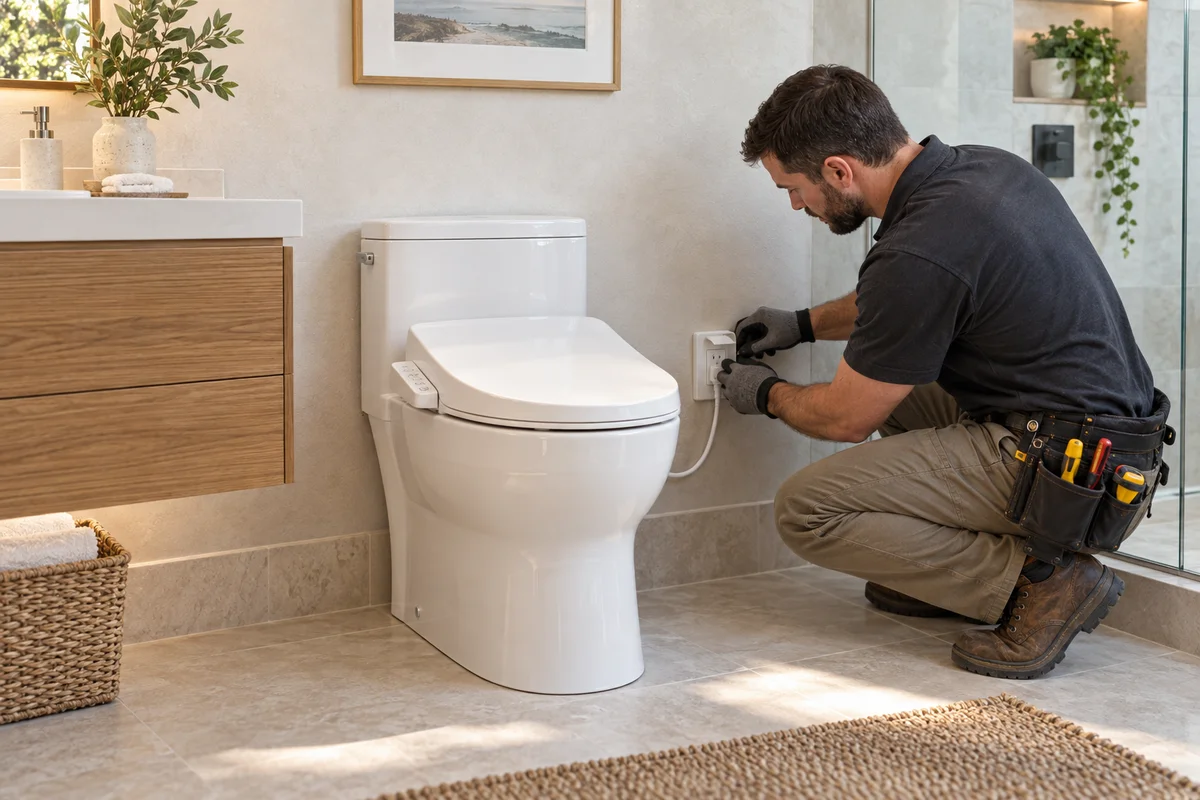
An electric bidet outlet installation adds a protected receptacle close to the toilet so a powered bidet seat can plug in without an extension cord. In most bathrooms that means extending an existing bathroom circuit or running a new one, with GFCI protection, in a spot that suits the seat's cord and keeps clear of water. Here's how to plan it so the job is done once.
Why the vanity outlet usually isn't enough
Most bathrooms have outlets near the sink and none behind the toilet. Bidet seat cords are usually short, and the manufacturer instructions typically say not to use an extension cord. Running a cord across the floor from the vanity also creates a tripping hazard and puts the plug where it can get wet during cleaning.
The practical fix is a new receptacle on the wall beside or behind the toilet, positioned so the cord reaches without strain and the plug stays accessible. The exact spot depends on your seat model, the side the cord exits, and what is inside the wall.
It also helps to think about which features you'll actually use. Heated seats, warm-water tanks, dryers and night lights all draw power. A seat with an instant water heater typically draws more at peak than a basic model with a small tank, which is one reason the circuit check matters.
GFCI protection and the circuit behind it
Bathroom receptacles are required to have GFCI protection, which cuts power quickly if current leaks to ground. The new outlet can be a GFCI receptacle itself or be protected by a GFCI device upstream on the same circuit. Many bidet manuals also call for a grounded, GFCI-protected outlet, so the installation lines up with the product's own requirements.
The electrician also checks the circuit. Bathroom receptacles are typically on a 20-amp circuit, and a heated bidet seat adds load to a circuit that may already serve hair dryers and other appliances. Some seat manufacturers recommend a dedicated circuit. If the existing circuit is already busy, or it isn't practical to extend it, a new circuit from the panel may be the better answer.
Choosing the outlet location
There is no single right height or distance for a bidet outlet. It depends on the seat, the toilet and the wall. Before the visit, look at the manual for cord length and which side the cord comes out, then check what's in that wall.
- Which side of the seat the power cord exits, and its length
- Whether the toilet supply valve is on the same side, so the plug stays clear of water
- Space between the toilet and a side wall, cabinet or tub
- What is inside the wall: plumbing vent, pocket door, tile or stone finish
- Whether you want the outlet hidden behind the tank or easy to reach
Tile and stone walls add work. Cutting a clean opening in finished tile takes care, and some finishes can't be patched invisibly if something goes wrong. If the bathroom is being remodeled anyway, add the outlet to the plan before tile goes up.
If you're choosing between hiding the outlet behind the tank and placing it to the side, consider cleaning and access. A hidden outlet looks tidier, but you should still be able to reach the plug and test the GFCI without removing the toilet or the seat. When the GFCI device protecting the outlet is elsewhere, such as at the vanity, label it so you know where to reset it.
Permits and inspections in Los Angeles
In the City of Los Angeles, adding a new outlet or circuit is generally treated as electrical work that needs a permit from LADBS, the Department of Building and Safety. Many other cities in LA County have their own building departments with their own rules. Our licensed electrical contractor confirms what applies at your address and includes permit handling in the scope when it's needed.
Replacing an existing receptacle with a GFCI in the same box is a smaller job than adding a new outlet. Knowing which one you need helps set expectations for cost and scheduling.
How an electric bidet outlet installation usually goes
A typical visit starts with confirming the circuit and the wiring route, turning off power at the panel, and cutting a box opening at the agreed location. The electrician fishes new cable from an existing outlet, a nearby junction or the panel, installs the box and receptacle, restores power and tests GFCI function. Drywall around the box is usually tidy, but routes through finished walls can leave small access openings to patch.
Coordinate the plumbing side too. The bidet seat usually connects to the toilet supply with a tee valve. If you're having the seat installed at the same time, say so, so the visit can be planned as a single appointment.
Plan on being home for the visit, and clear the area around the toilet and the path to the panel. If you live in a condo or apartment, check with the HOA or building management first, since work inside shared walls or on building circuits can need their approval.
Once the outlet is in, test the GFCI monthly using its test button, as the manufacturer recommends. If it trips repeatedly with the seat plugged in, stop using the seat and have the seat and circuit checked rather than resetting it over and over.
What we need from you to quote it
- Bidet seat model and a link to its installation manual
- Photos of the toilet, the wall on both sides and the nearest existing outlet
- A photo of your electrical panel with the door open, labels visible
- Wall finish near the toilet: drywall, tile or stone
- Whether a remodel is planned or the bathroom is staying as is
- Your address and preferred dates
Send these to Chain Construction and we'll review the scope with our licensed electrical partner, then confirm whether an existing circuit can be extended or a new one is recommended.