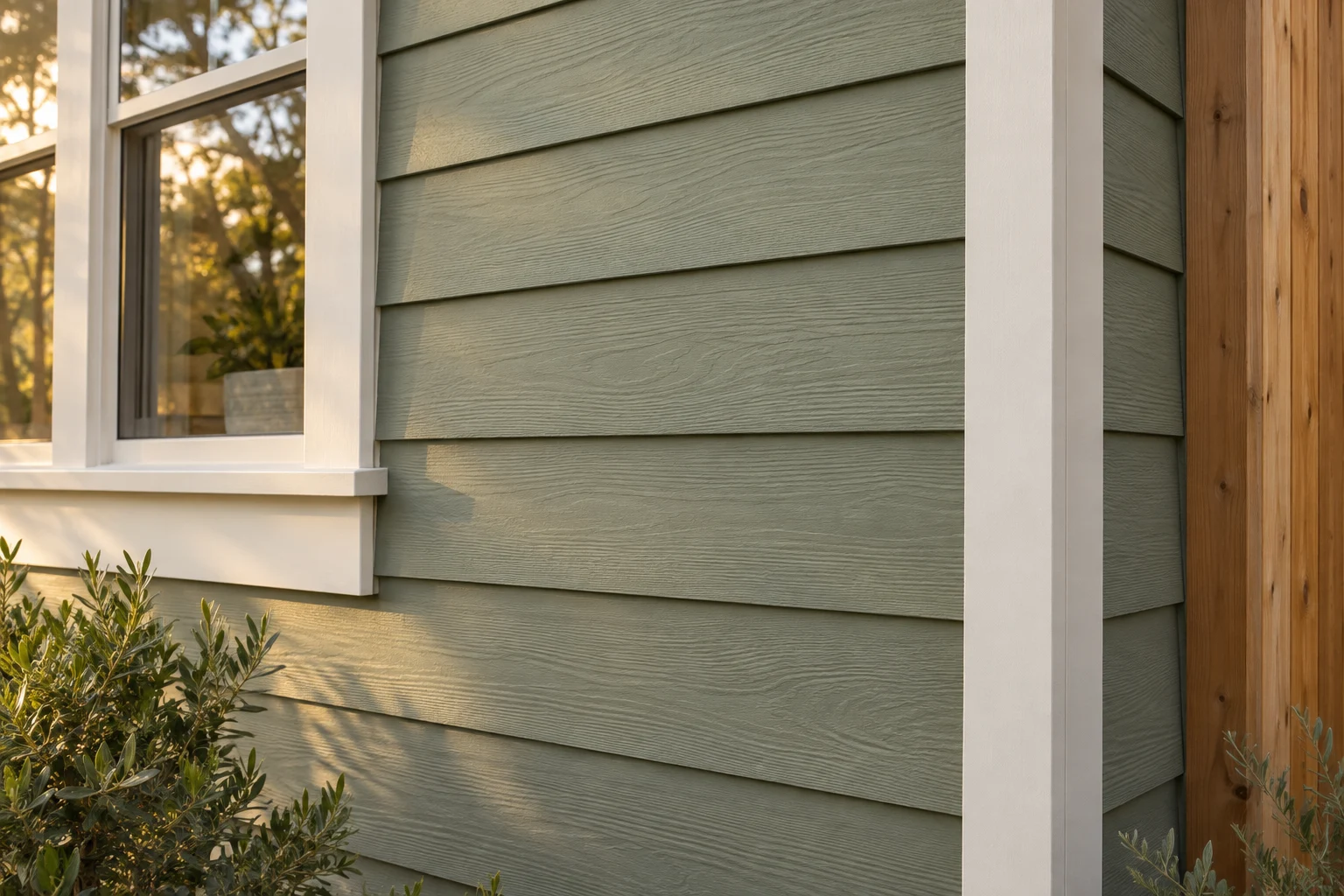
Choosing siding is a combination of four decisions: the material, the profile, the color and the trim. Each affects the others, and all of them depend on your home's architecture, climate exposure and, in some neighborhoods, fire-zone rules. Making them together, with samples on the actual house, produces a more considered exterior than picking each one separately.
Materials: fiber cement, wood and other options
Fiber cement is a popular choice in Southern California. It is dimensionally stable, resists rot and insects, holds paint well and comes in many profiles and textures, either primed for painting or factory-finished. It is heavier than wood and requires specific cutting and handling practices to control silica dust.
Wood siding, such as cedar or redwood, offers natural grain and warmth and can be painted, stained or left to weather. It needs more maintenance in strong sun and can be limited or require treated products in fire zones. Other options include engineered wood, metal panels and composite products, each with its own look, maintenance needs and code limitations.
- Fiber cement: stable, low-rot, paintable, heavier to install
- Cedar or redwood: natural character, more upkeep, check fire-zone suitability
- Engineered wood: lighter, wood look, follow manufacturer's moisture details
- Metal panels: modern profiles, durable, attention to thermal expansion and dents
- Stucco: traditional in Los Angeles, seamless look, different repair and crack considerations
Going from stucco to siding
Many Los Angeles homes are finished in stucco, and some owners want the look of lap or board-and-batten siding instead. There are two broad approaches: removing the stucco down to the framing and rebuilding the wall with sheathing, weather barrier and siding, or installing siding over existing stucco with a furring system where the condition and code allow it.
Both change the depth of the wall around windows and doors, which affects trim, flashing and how the window sits relative to the new face. Removing stucco is noisier and messier but lets you inspect and repair what's behind it. A site review is the right starting point before choosing either route, and a permit is typically required.
Fire hazard zones and material choices
Many hillside and canyon areas of Los Angeles County are designated Fire Hazard Severity Zones. In those zones, the California Residential Code (Section R337) sets requirements for exterior wall coverings, such as noncombustible or ignition-resistant materials or assemblies tested to specific standards. Many fiber cement and stucco products are commonly used to meet these requirements, but compliance depends on the specific product and assembly. Check your parcel's fire-zone status and ask for the product's documentation before finalizing.
Profiles and how they shape the house
Profile is the shape and pattern of the siding. Horizontal lap siding in narrower exposures feels traditional and detailed; wider exposures look cleaner and more contemporary. Vertical board-and-batten emphasizes height and suits farmhouse and modern styles. Flat panels with reveals give a minimalist look. Shingles add texture and suit cottage or coastal styles.
- Narrow lap: traditional, detailed shadow lines
- Wide lap or smooth plank: contemporary, calmer walls
- Board-and-batten: vertical emphasis, farmhouse or modern
- Panels with reveals: minimal, architectural
- Shingles or shakes: textured, cottage or coastal character
Consider the proportions of your walls and the spacing of windows. Lines that align with window heads and sills look intentional. Mixing two profiles, for example lap on the main body and vertical boards on a bay or gable, can add interest if the break points are planned.
Color, texture and window trim together
Color reads very differently outdoors. Southern California sun can wash out pale colors and intensify saturated ones. Look at large samples on the actual wall in morning and afternoon light, from the street as well as up close, and next to elements that will stay: roofing, windows, doors, paving and stone. Texture matters as well; a smooth finish and a wood-grain finish in the same color do not look the same.
Window and corner trim frame the house. Trim width, profile and color decide whether windows stand out or recede. Wider trim in a contrasting color gives a crisp, traditional look; narrow trim painted the body color feels more modern. Keep the number of finishes intentional, usually a body color, a trim color and one accent such as the front door. Record the exact product name and color code rather than a general color name.
Practical factors that narrow the choice
Beyond looks, a few practical questions help narrow the options. How much maintenance are you willing to do? Painted fiber cement typically needs repainting less often than stained wood, while natural wood may need refinishing on sun-exposed walls. Does the house face strong afternoon sun or salt air near the coast? Both affect how finishes age. Is the home in a historic district or subject to design review, where material and color may need approval?
- Maintenance you are comfortable with over the years
- Sun, coastal and wind exposure on each elevation
- Fire hazard zone requirements for your parcel
- Historic district, HOA or design review rules
- Whether windows will be replaced at the same time
- How the new siding meets the roof, foundation and any stone or brick
Bring these answers to your first conversation. They often rule out some options quickly and make it easier to focus samples on the choices that suit your home.
Next step: send your ideas
Send photos of each side of the house, the address so we can check fire-zone status, and a few images of exteriors you like. Tell us whether the current finish is stucco, wood or another siding. We will review options for material, profile, color and trim and explain how each would be installed on your walls. Call Chain Construction at (213) 519-8066.