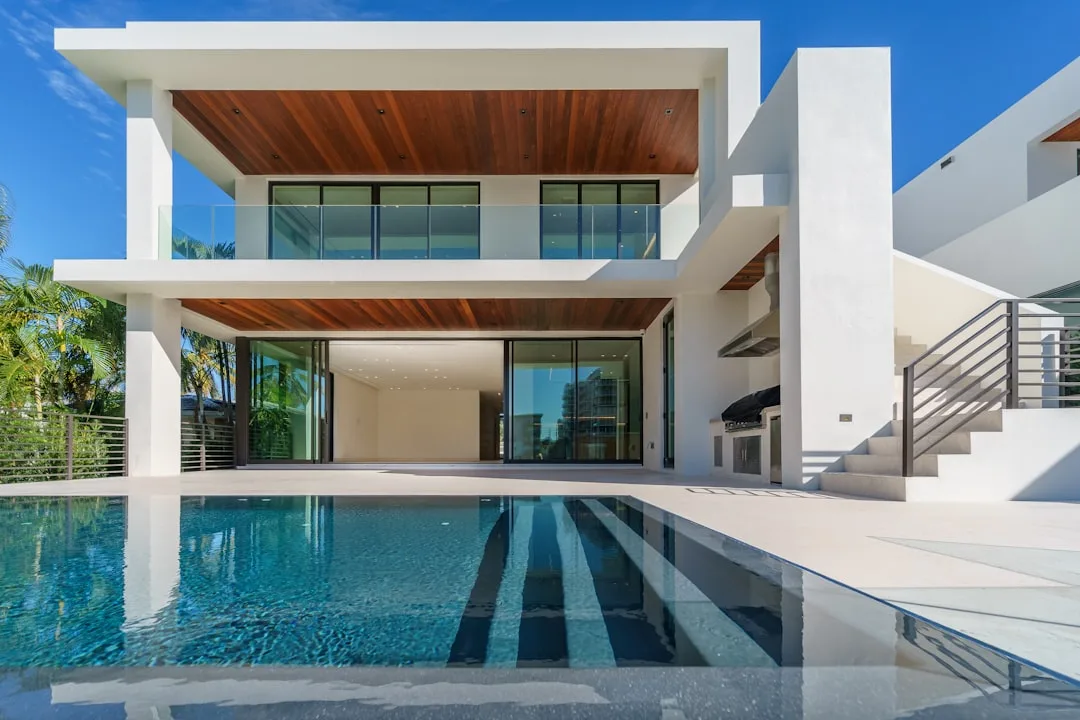
Pool finishes and lighting work together. The interior surface sets the water color, the waterline tile and coping frame the edge, the deck ties the pool to the house, and lighting decides how all of it looks after dark. Choosing them as one design avoids a pool that looks good in a sample box but disjointed in the yard. This guide walks through each layer and how they relate.
Interior finish: plaster, quartz and pebble
The interior finish is the surface you see through the water. It strongly affects water color: white finishes tend to read as light blue, while darker finishes give deeper blue, green or gray tones.
Common options include:
- Traditional plaster: smooth and classic, available in white and tinted colors
- Quartz-aggregate finishes: plaster with added quartz for color and texture
- Pebble finishes: small exposed stones for a textured, natural look
- Glass bead or polished aggregate finishes: smoother, with a subtle sparkle
Each option differs in texture underfoot, appearance, durability and cost. Ask your supplier about how each wears over time, what maintenance it needs, and how water chemistry affects it. The same finish can look different in shallow and deep areas, and color can vary from batch to batch.
Waterline tile
Waterline tile runs along the top of the pool wall where the water meets the edge. It protects that area and makes cleaning scale lines easier. It is also one of the most visible design elements.
Choose tile rated for pool use. Options range from porcelain and ceramic to glass and stone. Consider how the tile works with the interior finish and coping: a strong contrast defines the edge, while a close match makes the pool feel calmer. If you are thinking of a fully tiled interior or tiled steps and benches, review that decision together with the interior finish.
Coping and edges
Coping caps the pool wall and forms the edge people sit on and walk past. Common materials include natural stone, precast concrete, poured concrete and pavers. The edge profile can be rounded, square or cantilevered.
Look at comfort and practicality. Coping gets hot in the sun and wet feet cross it constantly, so surface texture and heat matter. Check that the coping color works with both the waterline tile and the deck, and that the profile suits the style of the house.
Decking and surrounding paving
The deck is often the largest visible surface in the pool area. Options include stone, concrete pavers, poured concrete with a textured or coated surface, and porcelain pavers rated for outdoor use.
Key questions for Los Angeles yards are surface heat, slip resistance when wet and drainage away from the house and pool. Lighter colors tend to stay cooler underfoot. Ask for samples to be viewed in full sun and check them wet. If the pool area connects to an existing patio, decide whether to match, blend or intentionally contrast.
LED pool lighting
Most new pool lighting uses LEDs, which offer long life and lower energy use compared with older lamp types. Options include white lights, color-changing lights, and several smaller lights instead of one or two large fixtures.
Plan lighting with the layout. Consider how many lights are needed for an even look, where they face so they don't glare toward the house or seating, and whether steps, benches or water features get their own lights. Pool lighting must follow electrical code rules for pools, including bonding and ground-fault protection, and is installed by licensed electricians. Coordinate controls, such as app or remote control and schedules, with the pool equipment.
Light the whole outdoor space
Pool lighting should connect with landscape and deck lighting. Step lights, path lights, uplighting on trees and soft lighting at seating areas make the space usable and safer at night. Too much brightness in one area can flatten the look of the pool.
Review how the finishes will look under your chosen light color. Warm white, cool white and colored light all change how the interior finish and tile appear.
Pool finishes and lighting checklist
- Interior finish sample, color and product reference
- Waterline tile sample, viewed next to the interior finish
- Coping material, color and edge profile
- Decking material, checked in sun and wet
- Number, type and placement of pool lights
- Light color and control method
- Landscape and path lighting plan
- Care instructions and product records for handover
Maintenance and long-term care
Finishes age differently. Interior surfaces respond to water chemistry, so balanced water helps protect them from etching, staining and scaling. Waterline tile collects calcium from hard water, which is common in parts of Southern California, and needs regular cleaning.
Ask how each material is cleaned, what products to avoid and what the typical upkeep involves. Check whether light fixtures can be serviced or replaced without draining the pool, and where the controls and transformers sit. At handover, keep product references, care instructions and warranty documents from the manufacturers together in one place.
Review samples in context, then approve in writing
Look at samples outside, next to the house, in daylight and in the evening. Place interior finish, tile, coping and deck samples together. Wet the samples, because pool materials look different when wet. Record the approved product references so there is no confusion later.
What we need from you to quote it
Send your pool plan or design, preferred finishes and lighting ideas, and photos of the house and yard. Call Chain Construction at (213) 519-8066. Construction is performed through our licensed construction partner, and we will help you compare finishes and lighting within one coordinated scope.