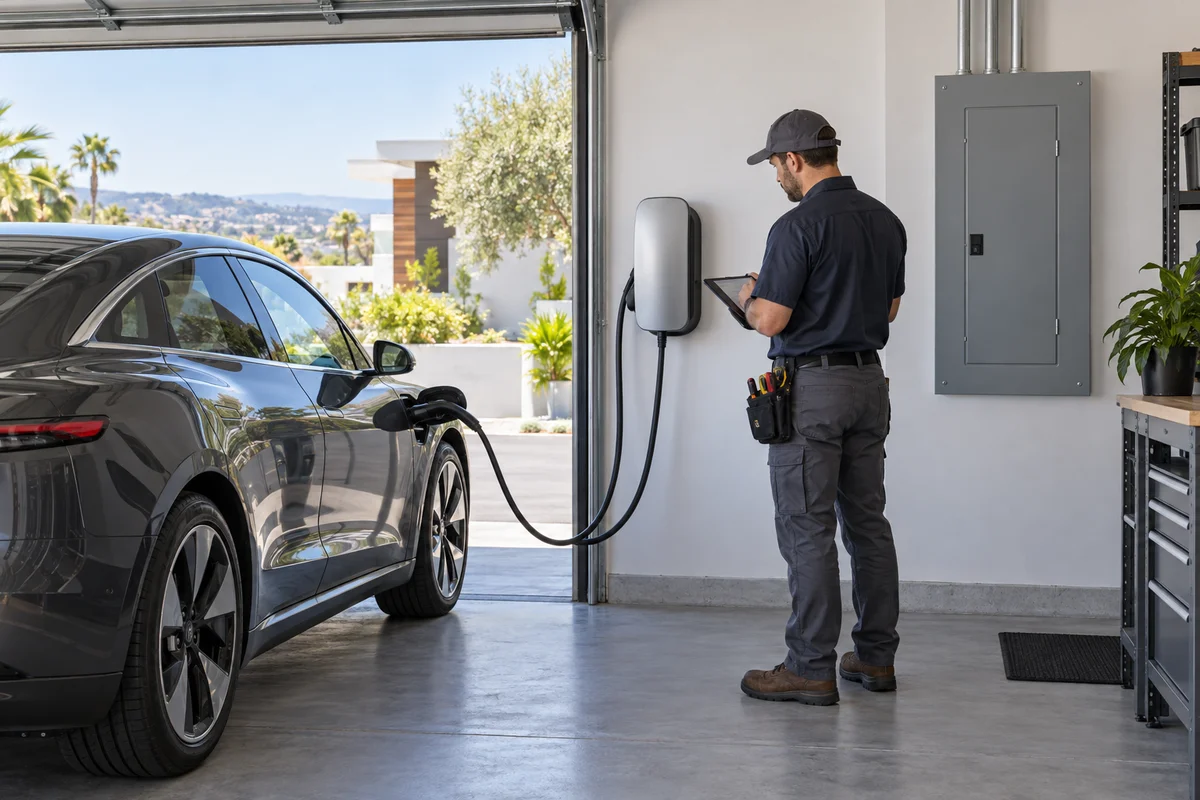
Electrical planning for home electrification means working out, before you buy, whether your panel and service can carry an EV charger, heat pump, induction range or battery system, and where each circuit should run. Many Los Angeles homes will add these over several years, so planning them together avoids paying to open the same walls twice.
Why home electrification changes the electrical picture
Gas appliances use little electricity. When they're replaced with electric equipment, each one typically needs its own 240-volt circuit and adds real load. A home that ran comfortably on a small service with a gas furnace, gas water heater and gas range can run short once those move to electric and an EV charger joins them.
California has pushed new buildings in this direction. The 2022 Energy Code introduced electric-ready requirements for new single-family homes, such as dedicated circuits or space for future heat pump water heaters, electric cooking and dryers where gas is installed. Existing homes aren't required to retrofit, but the same logic applies when you remodel: plan capacity and routes while the walls are open.
The order matters. Replacing a gas water heater with a heat pump model, adding an EV charger and switching to induction are often done years apart. If each is planned separately, the second or third addition can find the panel full and force an upgrade that could have been done once. A single plan for the next several years avoids that.
Equipment to plan for and what each needs
- EV charger: a dedicated 240-volt circuit, sized to the charger and how fast you want to charge
- Heat pump for heating and cooling: a dedicated circuit for the outdoor unit, often another for the air handler
- Heat pump water heater: a 240-volt circuit in most cases, plus space and airflow at the tank location
- Induction range or cooktop: a large 240-volt circuit sized to the appliance's rating
- Electric or heat pump dryer: a 240-volt circuit for most full-size models
- Solar and batteries: panel space or a busbar rating that allows backfeed, and room for disconnects and equipment
Always size to the actual product. Chargers, ranges and heat pumps vary widely, and the nameplate rating on the spec sheet sets the circuit size. Where a product isn't chosen yet, the electrician can plan for a typical rating and note the assumption.
Location is as important as circuit size. A heat pump water heater needs space and air around it, which a tight closet may not provide. An outdoor heat pump unit needs clearance and a spot where noise won't bother you or the neighbors. An EV charger should be placed where the cable reaches the car's charge port without crossing a walkway.
Panel capacity, load management and service size
A licensed electrical contractor starts with a load calculation for the home as it is plus the equipment you plan to add. If the numbers work, new circuits can go into the existing panel or a subpanel. If they don't, there are a few paths: a larger panel and service coordinated with LADWP or SCE, or load-management equipment that prevents certain loads from running at full power at the same time.
Load management can let an EV charger share capacity with a dryer or range without a service upgrade, depending on the equipment and what your building department accepts. It's worth discussing before assuming a new service is the only option. The right answer depends on your current service, your panel's condition and how much you plan to add.
If a service upgrade is the answer, it involves the utility and a permit from your city's building department, and it usually requires a scheduled power shutdown. Timing it with a remodel means the meter and panel work happens once, while electricians are already on site and walls are already open.
Solar and battery readiness
Adding solar or batteries later is easier if the panel can accept them. Main panels have busbar ratings that limit how much solar can feed back, and some older panels have no practical room. Leaving space near the meter and panel for disconnects, an inverter and a battery helps, as does a clear conduit path to the roof.
New single-family homes in California have been subject to solar requirements for several years, and newer code cycles added battery-ready provisions. For existing homes, readiness is optional, but it's cheap to plan during a remodel. Incentive and rebate programs change often, so check current offers with your utility and the program administrators rather than planning around a specific amount.
Prewire during a remodel, install later
If you're remodeling but not buying everything now, consider running conduit or cable to future locations and capping it safely. A garage EV circuit, a 240-volt line to the water heater closet or a conduit from the panel to the attic costs far less while framing is exposed than after drywall and paint.
Write down what's been prewired and where, keep photos of open walls, and label spare breakers or conduit ends. That record is valuable to the next electrician and to future buyers.
In homes with a raised foundation, a crawlspace can make future runs easier to add later. On a slab, runs often go through walls and the attic, so prewiring during a remodel saves even more. Detached garages may need a trench, which is best done alongside landscaping or hardscape work.
Keep product decisions flexible where you can. Chargers, heat pumps and batteries change quickly, and a prewired circuit sized with some margin will usually accept whatever model you choose when the time comes.
What we need from you to plan it
- Photos of the electrical panel, meter and main disconnect with labels visible
- Your utility, LADWP or SCE, and your city
- Equipment you're buying now, with spec sheets
- Equipment you might add in the next five to ten years
- Remodel drawings or a description of which walls will be open
- Where you park and where a charger would be most convenient
Send these to Chain Construction. Our licensed electrical contractor reviews capacity first, then lays out circuits and prewiring so each step of your electrification plan fits the one before it.