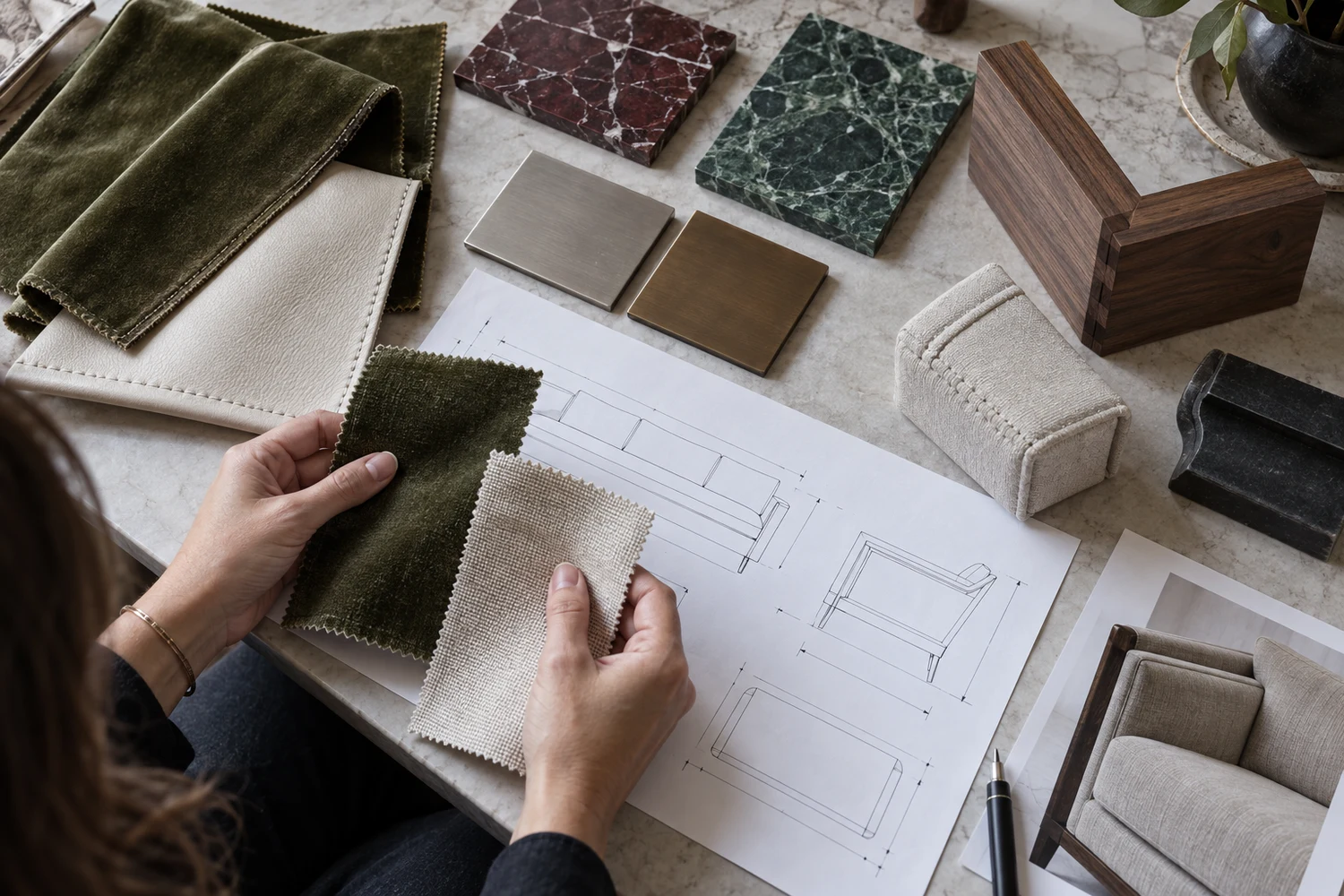
Custom furniture production approval is the point where a design becomes a commitment. Before a factory cuts wood or stone for your property, you should have reviewed shop drawings, compared physical samples, seen a prototype for key pieces, and agreed how quality will be checked. This guide explains each step so your approvals are clear, recorded and hard to misread.
Reviewing shop drawings
Shop drawings are the factory's interpretation of your design. They show overall dimensions, sections, joinery, materials, hardware, finishes and how pieces connect to walls, floors and appliances. Read them against your room schedule and verified site measurements, not against the original inspiration image.
- Overall dimensions match the room schedule and field measurements
- Clearances for doors, drawers, walkways and appliances are shown
- Seat height and depth, table height and counter heights are stated
- Materials, thicknesses and finish codes match the approved samples
- Hardware type, finish and quantity are listed
- Connections to walls, plumbing, power or lighting are detailed
- The piece can pass through doors, stairs and elevators, or splits into sections
- Each drawing carries the item code, revision number and date
Mark up comments directly on the drawings and return one consolidated set. Several reviewers sending separate notes by message is a common source of contradictions that surface only after production.
Built-in pieces need special care. Cabinetry, wardrobes, vanities and stone tops depend on actual wall lengths, ceiling heights and plumbing locations, which can differ from the architectural plans. Agree who takes field measurements, when they are taken relative to drywall and flooring, and how those numbers are fed back into the drawings. Approve built-ins only on revised drawings that reflect verified dimensions.
Comparing material samples
Review stone, wood, metal, leather and fabric samples together, under daylight and under lighting similar to the finished room. A finish that looks right alone can clash beside the floor or cabinetry it will live with. Record each approved sample with its supplier reference and the item codes it applies to.
Natural materials vary. Wood grain and color shift from board to board, and stone varies across a slab and between slabs. Discuss the acceptable range, and for feature stone ask for photos of the actual slabs and a proposed layout showing how veining will run across a countertop or wall. A small sample cannot show a full slab pattern.
Look beyond color. Ask about the performance of each material in its real use: how an upholstery fabric resists abrasion and staining, whether a stone is sealed and how it reacts to acids in a kitchen, how a lacquer or oil finish handles water rings and heat. Hotels, restaurants and stores should state commercial performance needs up front so suppliers propose suitable options.
Prototypes and pre-production samples
For seating, beds, repeated hotel pieces and anything with complex joinery, a prototype or pre-production sample is the best protection. It lets you check comfort, proportions, stability and finish on a real object. Some pieces are reviewed in person in Los Angeles; others through detailed photos and videos with a tape measure in frame.
Once approved, the prototype becomes the golden sample: the reference against which production pieces are judged. Keep a record of it, with photos, measurements and any agreed adjustments, so inspectors and the factory are comparing against the same thing.
Signing off on custom furniture production approval
Approval should be a single, dated package per item or group of items: the final shop drawing revision, approved sample references, prototype notes and any agreed changes. Name the person authorized to sign, and mark any detail still open instead of approving around it. Changes requested after sign-off can affect cost and production time, so it pays to resolve questions before, not after.
Quality control inspections
Inspections check production against the approved package. Common stages in furniture sourcing include a pre-production check of materials and components, a during-production inspection once part of the order is complete, and a pre-shipment inspection when goods are finished and mostly packed. Inspectors usually sample pieces from the lot rather than checking every unit, following an agreed sampling level.
- Dimensions against drawings
- Finish color and sheen against the approved sample
- Joinery, stability and hardware function
- Upholstery tension, seams and cushion shape
- Stone thickness, edge profile, chips and fill
- Moisture content of solid wood, where specified
- Labels, item codes and carton markings
- Packing strength, corner protection and moisture protection
Agree beforehand what happens when an inspection finds defects: rework, replacement, re-inspection or a documented acceptance. Inspection reports with photos become part of the project record and help at receiving if something arrives damaged.
Approving packing and labeling
Packing is part of quality. A perfect sofa that arrives with crushed corners or a chipped stone top has still failed. Agree the packing method for each category before production ends: corner guards and foam for case goods, crating for stone and glass, moisture protection for long ocean transit, and carton sizes that fit through the site's doors and elevators.
Ask for carton labels that repeat the item code, room name and piece count, such as box 2 of 3. Those labels connect the factory's work to the room schedule and make receiving on site faster and far less error-prone.
What we need from you to move forward
Chain Construction sources custom furniture and materials from China for whole properties only, not single items. To plan approvals, we need your room schedule, design drawings or references, confirmed site measurements where available, the name of the person who approves each category, and your target installation window. Material viewings are available in Los Angeles by appointment.