When you are importing furniture from China for a whole home, hotel or store, the job is not done when production passes inspection. Goods still have to cross the ocean, clear U.S. Customs, travel from the port to your property and reach the right rooms undamaged. This guide covers each stage and what the site must have ready before the first truck arrives.
Ocean freight and how goods travel
Most whole-property packages travel by ocean freight in shipping containers. A full container load keeps your goods together from factory to destination, while a less-than-container load shares space with other shippers and involves more handling at consolidation points. Air freight exists for urgent or small items but is rarely practical for furniture and stone.
Large projects often ship in several containers from several factories. Group shipments by installation sequence where possible, so cabinetry and stone that go in early are not waiting behind loose furniture that goes in last. Transit and port times vary with season, carrier and congestion, so treat any schedule as an estimate and build in buffer.
Customs broker, ISF and entry
A licensed customs broker usually handles the paperwork on the importer's behalf. The importer of record remains legally responsible for accurate information, and a customs bond is generally required for commercial entries. Choose the broker early; they need the commercial invoice, packing list, bill of lading and product details.
For ocean shipments, U.S. Customs and Border Protection requires an Importer Security Filing, often called ISF or 10+2. The importer, typically through the broker, must submit it no later than 24 hours before the cargo is loaded onto the vessel at the foreign port. Late or inaccurate filings can lead to penalties and holds, so the factory and forwarder need to supply details on time.
Consistent paperwork speeds clearance. Product descriptions, quantities and values should match across the commercial invoice, packing list and ISF. Vague descriptions such as furniture parts invite questions; clear ones such as upholstered sofa with wood frame help the broker classify each line correctly.
Duties and compliance when importing furniture from China
Duties depend on each product's tariff classification, its value and its country of origin. Goods from China have been subject to additional tariffs that have changed several times, so rates should be confirmed with your customs broker for each shipment rather than assumed from a previous project. Budget for duties, broker fees, port charges and inland delivery as separate lines.
Some products carry extra requirements. Composite wood products such as plywood, MDF and particleboard, including those inside furniture, fall under the EPA formaldehyde standards in TSCA Title VI, which include certification and labeling rules. Certain wood and plant products may also require a Lacey Act declaration. Your broker and supplier should confirm what applies before goods ship.
From the port to your property
After release, containers move by truck from the port, either directly to the site or to a warehouse. Direct delivery is simpler but requires room for a container truck and a crew ready to unload within the allowed free time. A warehouse can receive, inspect and hold goods, then deliver room by room in smaller trucks when the site is ready. For busy or tight urban sites, that staging step often saves trouble.
Watch the clock once a container is available. Terminals and carriers allow a limited number of free days for pickup and return, after which storage, demurrage and detention charges can apply. Those charges add up quickly when a site is not ready, which is another reason to confirm the delivery plan with your general contractor before goods arrive at the port rather than after.
Getting the site ready for delivery
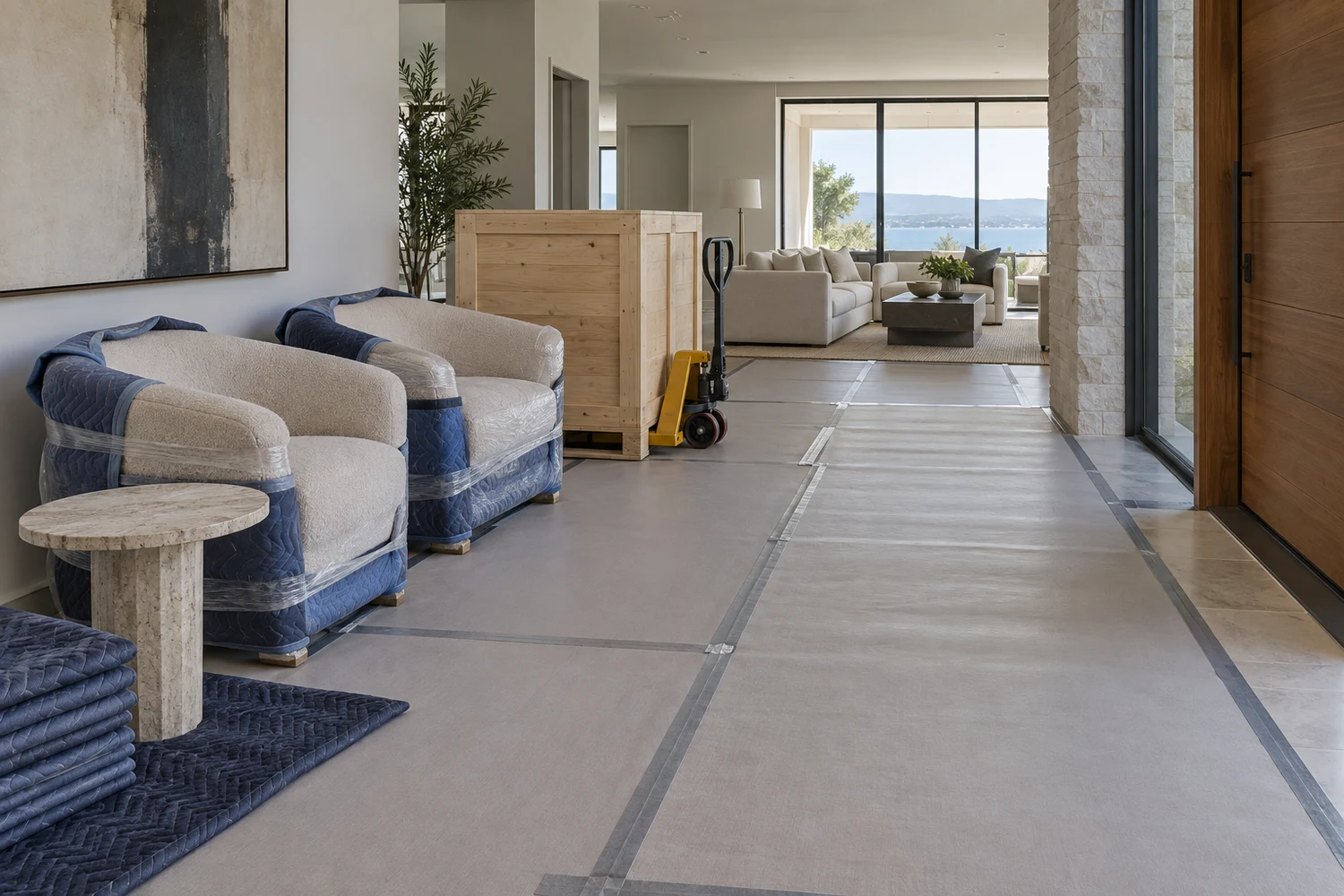
Furniture should not arrive into active construction dust or wet trades. Painting, flooring and major cleaning are usually finished in the rooms receiving furniture, and stone or cabinetry interfaces are ready for installation. Walk the route from the curb to every room with packed dimensions, not finished ones.
On projects still under construction, agree a phased plan with the general contractor. Kitchens and bathrooms may receive cabinetry and stone while bedrooms are still being painted, and loose furniture usually comes last. Sequencing deliveries by room readiness keeps finished pieces out of harm's way and avoids moving cartons twice.
- Truck parking or loading zone confirmed, including any street permits or building rules
- Door openings, stair turns, hallways and elevator size checked against packed dimensions
- Floors, walls, door frames and elevator interiors protected
- A dry, secure staging area for cartons awaiting installation
- Power, lighting and restrooms available for the installation crew
- Wall blocking in place for wall-mounted cabinets, mirrors and headboards
- A receiving contact on site with the packing list and room schedule
- A plan for removing crates, cartons and packaging
Receiving, damage checks and installation
Count every carton against the packing list before the driver leaves, and note visible damage on the delivery receipt. Photograph damaged packaging before opening it. Unpack and inspect promptly, because claims often have tight reporting windows. Match item codes on labels to the room schedule so each piece goes straight to its room.
Agree in advance who unloads, who unpacks, who assembles and who installs, since these are separate tasks. Stone countertops, built-in cabinetry and heavy fixtures usually need specialist installers, and any construction work belongs with a licensed contractor.
What we need from you to plan delivery
Chain Construction coordinates furniture and materials sourcing from China for whole properties across the U.S. To plan logistics, send the property address, access notes and photos of the route, building delivery rules, your target installation window, and the contact for your general contractor or site manager.