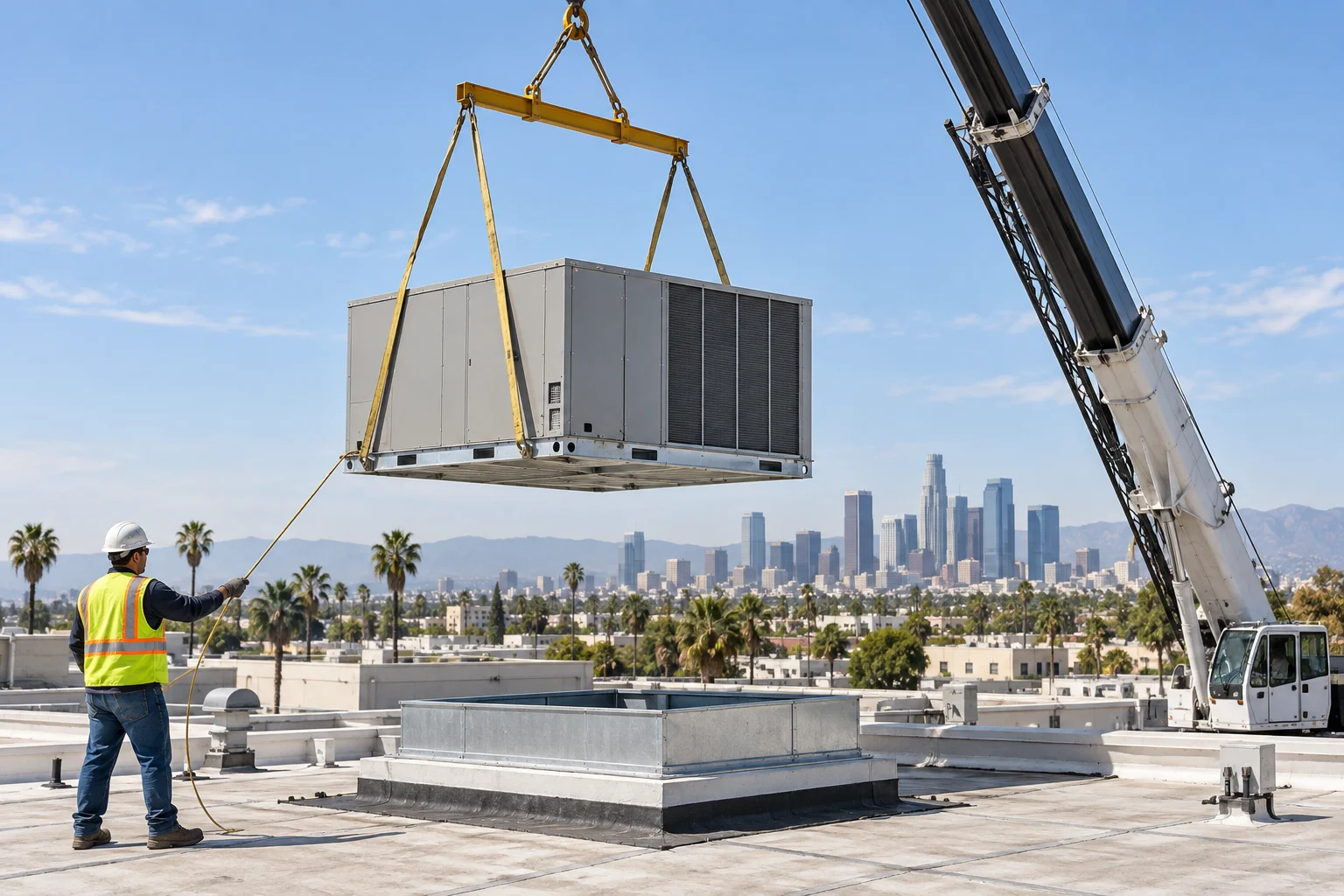
A smooth AC replacement day depends on a few things you can set up in advance: clear access to the equipment, a plan for the power and cooling shutdown, a crane or lift if the unit is on the roof, and time at the end to review the new system. Here is how to prepare your home and what to expect from arrival to handover.
Confirm the plan a few days before
Review the signed proposal with the installer before the day. Confirm which equipment is being installed, whether ducts, electrical or the line set are part of the job, and who is handling the permit and inspection. Ask how long your specific installation is expected to take. A straightforward like-for-like replacement is often completed in a day, while duct work, electrical upgrades or a switch to a heat pump or ductless system can take longer. Treat any estimate as a plan, not a promise.
- Arrival window and the name of the lead installer
- Where the truck will park and where equipment will be staged
- Whether a crane or lift is needed, and when it is scheduled
- When cooling and power to the system will be off
- Whether the permit inspection and Energy Code verification happen the same day or later
Clear access inside and outside
Installers need room to remove the old equipment and bring in the new. In Los Angeles homes, that often means a narrow side yard to the condenser and an attic, garage or closet for the furnace or air handler.
- Clear a path from the street to the outdoor unit, including gates and side yards
- Trim plants and move stored items around the outdoor unit
- Clear the garage, closet or attic hatch area and the floor below a pull-down ladder
- Move vehicles if the garage is part of the work path
- Remove fragile items from hallways and stairs on the route
- Unlock the electrical panel area and point it out to the crew
If the attic is the only route to the furnace or air handler, expect foot traffic through the room below the hatch. Cover or move furniture there, and let the crew lay floor protection along the path.
Do not disconnect the equipment, drain lines or wiring yourself. The crew handles refrigerant recovery, electrical disconnection and removal of the old unit.
Plan for the power shutoff and no cooling
The installer will turn off power to the HVAC circuits while working, and cooling will be off from the start of removal until the new system is running. If electrical work is part of the job, other circuits in the house may be off for part of the day as well.
On a hot day, plan ahead. Keep blinds closed, run fans on other circuits, and arrange a cool place for pets. If anyone at home is sensitive to heat or relies on powered medical equipment, tell the installer so shutoffs can be planned around them. If you work from home, ask when power will be interrupted so you can save work and plan calls.
Rooftop units and crane lifts
Some homes and many small commercial buildings have package units or condensers on the roof. Replacing them usually requires a crane or lift, which adds logistics:
- A clear spot for the crane truck, sometimes on the street
- A street use or parking permit if the city requires one for the location
- Notice to neighbors or tenants about noise and blocked parking
- Moving cars, patio furniture and anything under the lift path
- A backup date in case of wind or other conditions that prevent a safe lift
The installer or crane operator determines what the lift requires. Your role is to confirm access and tell them about building rules or tight spaces.
Handover on AC replacement day: what to check
Once the system is installed, the technician should start it up, check refrigerant charge, airflow and temperatures, and test the thermostat and safety controls. Before the crew leaves, walk through with them:
- Feel cool air at the supply registers and listen for unusual noise
- Learn the thermostat: modes, schedules, fan settings and any app setup
- See where the filter is, what size it takes and how often to check it
- Look at the condensate drain, secondary pan and float switch, if the unit is in an attic
- Check that the work areas and equipment site are cleaned up
- Collect model and serial numbers, warranty information and registration confirmation
- Confirm when the permit inspection and Energy Code verification will happen
The permit inspection and third-party verification required under California's Energy Code are often scheduled after installation day. Keep the date on your calendar and plan to provide access.
After the installation
Expect a short adjustment period. A new system, especially a variable-speed one, may run longer at lower speed than your old unit did, which is normal and usually quieter. Give the thermostat schedule a few days before changing it.
For the first few days, pay attention to how the system runs. Note any rooms that do not cool as expected, water where it should not be, or error codes on the thermostat, and report them to the installer. Keep the proposal, invoice, warranty and inspection documents together; they will help with future service and a sale of the home.
What we need from you before the day
Send us your preferred dates, access details for gates, attic and roof, parking conditions, and anything the crew should know about pets, people at home or building rules. Call Chain Construction at (213) 519-8066. Installation is performed by our licensed HVAC partner.