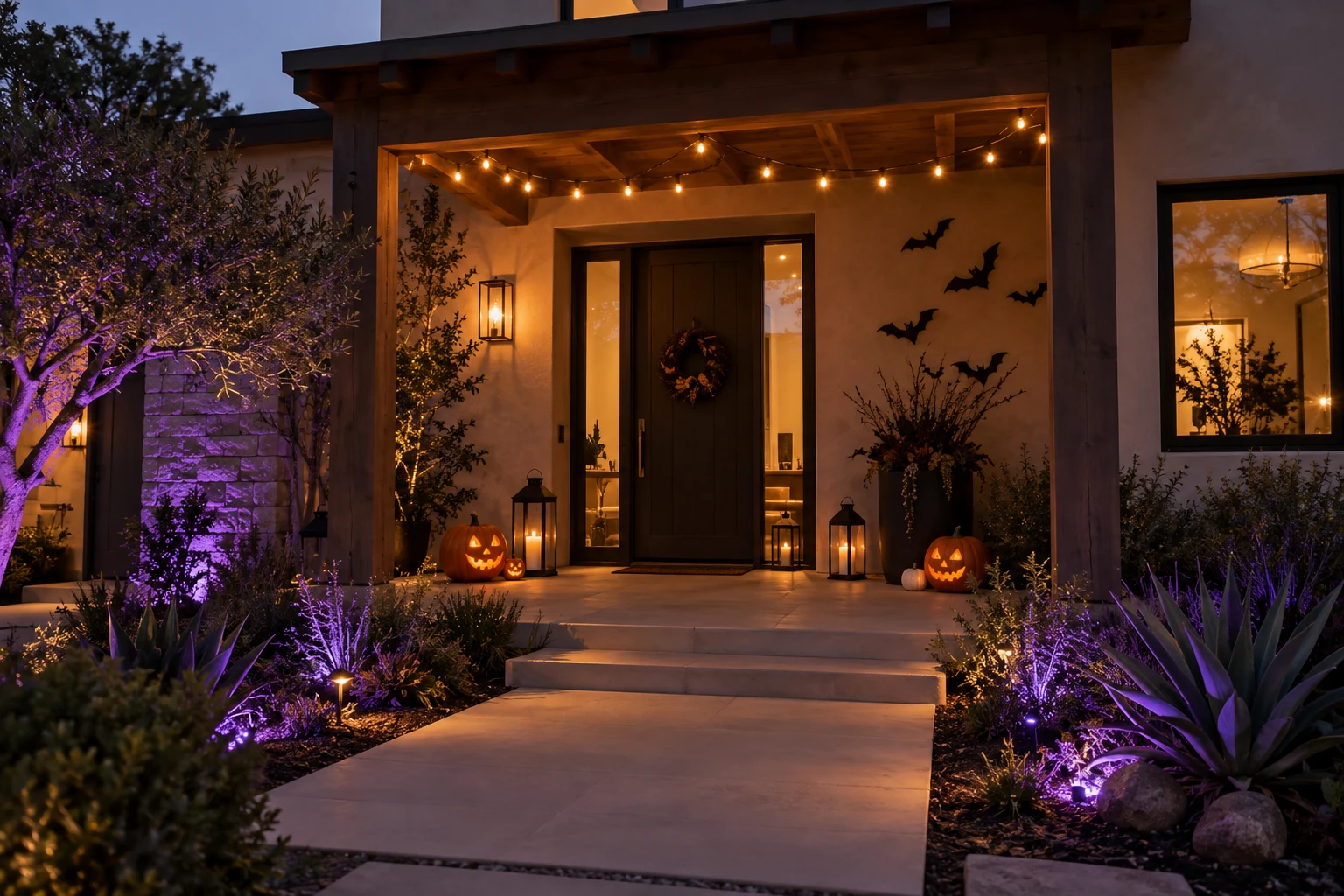
Halloween lighting installation works best when you pick one focal point, light it well, and plan the power before the first prop goes up. A porch, a front-yard tree or a shop window lit in a consistent color reads better from the street than a dozen unrelated effects. Here's how to plan a display that looks deliberate, keeps walkways safe and comes down on schedule.
Pick a focal point and a color palette
Start with where people will see the display from: the sidewalk, the driveway or a storefront across the street. Choose one or two features to light, such as the entry, a tree, the roofline or a window, and build around them. Amber and warm orange feel classic; purple and green feel theatrical; cool white with shadows can look eerie without being loud.
Send a few daylight photos and reference images of the look you like. Note which props and lights you already own, and which you want supplied. That keeps the proposal focused on what actually needs installing.
Think about the display at dusk as well as full dark. Many trick-or-treaters arrive around sunset, so a mix of light and shadow that reads in twilight is more effective than effects that only work at midnight. Uplighting a tree, a colored wash on the facade and a few lit props near the door usually carry the whole scene.
Use outdoor-rated lights and protected outlets
Decorations used outside should be rated for outdoor or wet locations. Indoor string lights and extension cords break down faster in weather and sprinkler spray. Check labels on lights, cords, timers and inflatable blowers, and retire anything with cracked insulation or damaged plugs.
Outdoor receptacles at homes are required to have GFCI protection, and outlets that stay in use outdoors need weather-resistant in-use covers that close with a cord plugged in. Many older Los Angeles homes have one tired outdoor outlet or none at all. If you want a reliable power point near the display, a licensed electrical contractor can add or upgrade an outdoor outlet as permanent work that serves every season.
- Outdoor rating printed on each light set, cord and timer
- GFCI-protected outdoor outlets that reset and test properly
- In-use covers on outlets that will stay plugged in
- Connections kept off the ground and away from sprinklers
- Total load spread so one circuit isn't overloaded
- Cords routed along edges, not across steps or paths
Add up what's plugged in. Fog machines, inflatables and projectors draw more than LED string lights, and several of them on one outdoor outlet can trip a breaker right when guests arrive. Spreading loads across outlets on different circuits, and testing everything a day or two before, avoids most surprises.
Halloween lighting installation vs. electrical work
Hanging lights, placing illuminated props and setting timers is decorative, plug-in installation. It uses existing outlets and comes down after the season. Adding an outdoor outlet, a dedicated circuit or permanent landscape lighting is fixed electrical work that belongs to a licensed electrical contractor and may need a permit, depending on your city.
Keeping the two separate makes the proposal clearer. You can approve the decorative scope each year, and treat any wiring upgrade as a one-time improvement that also helps with holiday lights, outdoor dining or pool equipment later.
A good example is a front-yard tree that you light every October and December. Rather than running a long cord from the porch each season, a permanent GFCI-protected outlet near the tree, installed once by a licensed electrician, makes every future display simpler and removes a tripping hazard from the lawn.
Keep entrances usable and trick-or-treaters safe
Halloween night brings more foot traffic than usual, often in the dark and in costumes. Keep steps, paths and doorways clear and evenly lit. Fog machines, projectors and animated props look great but need stable placement away from where kids walk, and their cords need a route that doesn't cross the path.
For a restaurant, shop or office, confirm with building management whether there are rules about attaching to the facade, blocking signage or using sidewalk space. Plan installation outside business hours when possible, and make sure exits and accessible routes stay clear.
Avoid open flames in jack-o'-lanterns near costumes, dry leaves or fabric props; battery candles or small LED lights give a similar glow. Secure anything tall so wind can't push it over, and keep props out of the swing of doors and gates.
Timers, run times and takedown
A simple outdoor timer or smart plug keeps lights on for the hours that matter and off overnight. Agree on the start date, the daily schedule and the takedown date when you book. Early November takedown is common, and if you're planning holiday lights as well, some clients reuse mounting points and power runs for the next display.
Decide who owns the decorations and how they'll be stored. Labeling each set by location during takedown makes next year's installation faster.
For businesses, align the lighting schedule with opening hours and any evening events. A display that switches off at closing saves energy and reduces the chance of props being disturbed overnight.
What we need from you to quote it
- Daylight photos of the house, entry or storefront
- Reference images of the look you want
- A list of lights and props you already own
- Locations of existing outdoor outlets
- Installation date, nightly hours and takedown date
- For businesses: building rules and the on-site contact
Send these to Chain Construction. We'll propose the decorative layout and, if new outdoor outlets or circuits make sense, have our licensed electrical partner scope that work separately.